+86-13566758039


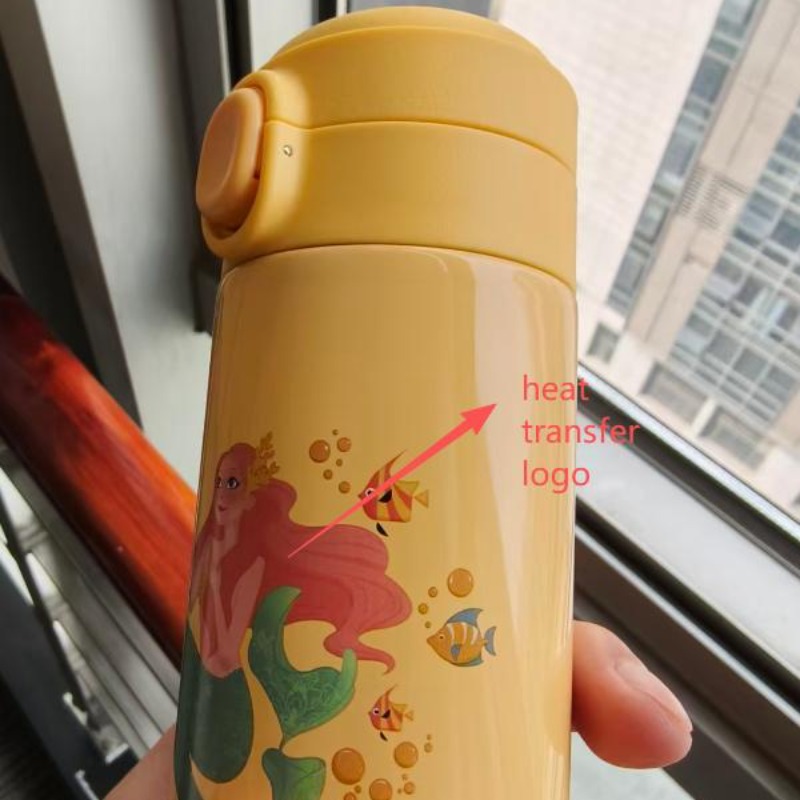
Color-printed logos are becoming increasingly common on the thermal mugs and tumblers we use today. Standard color printing techniques include UV printing, heat transfer printing, water decal application, and gas sublimation printing. This article focuses specifically on UV printing—currently the widely adopted technique for mass production.
We currently offer two standard finishes for UV logos: matte surface and glossy surface. The standard matte finish is achieved by directly printing onto the surface using a UV printer followed by curing; consequently, the surface exhibits a matte texture. However, for extremely intricate designs, this method may occasionally result in a slight blurring or pixelation effect. The glossy finish builds upon the standard UV printing process by applying an additional layer of clear gloss varnish over the design before curing; this results in a bright, lustrous surface effect. Thanks to the protective layer of clear varnish, the pigments appear more vibrant and true-to-color; as a result, glossy UV logos look more vivid and refined, with significantly less visible pixel granularity compared to standard matte UV logos.
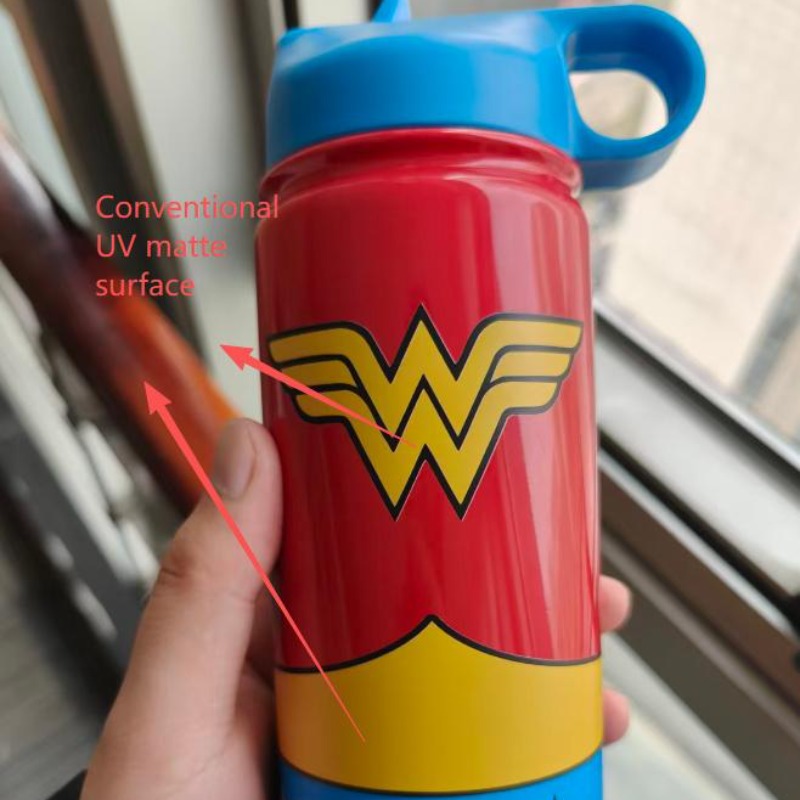
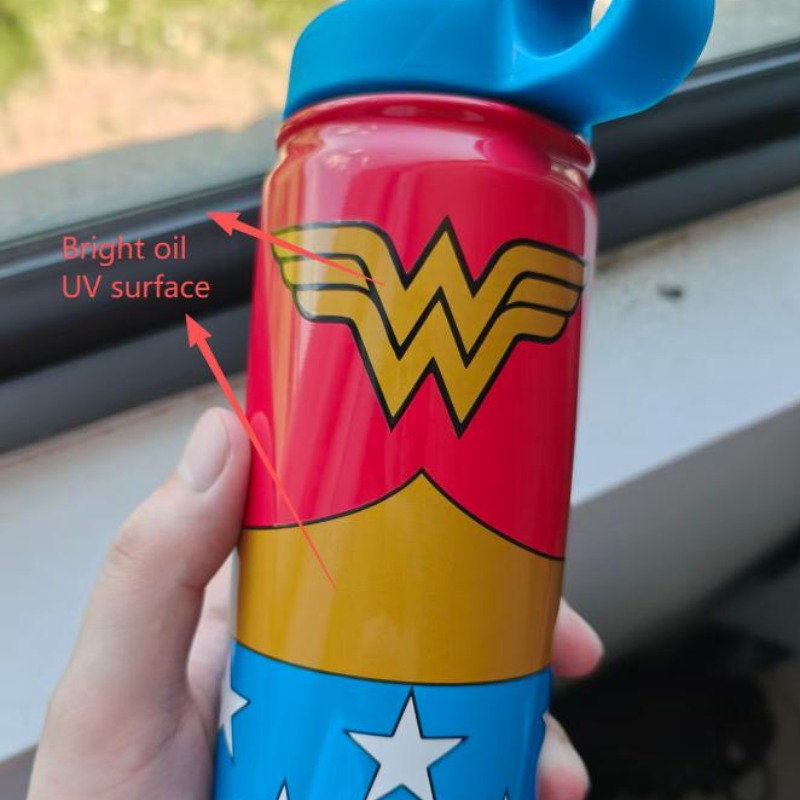
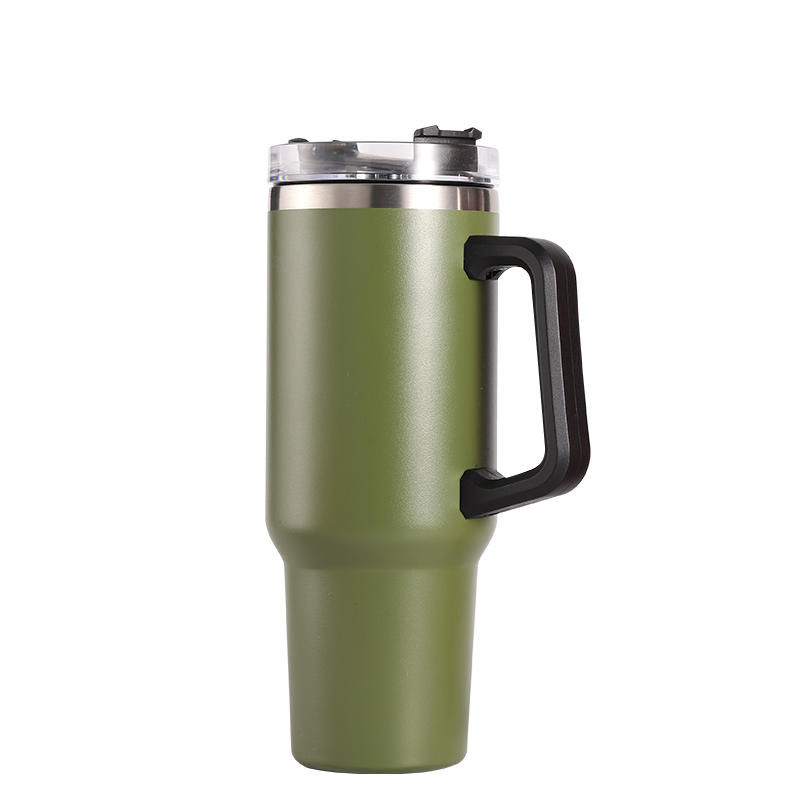
However, because UV logos are applied via a rotational, inline UV printing process, the technique does have certain technical limitations. For instance, while the entire surface of a handle-less mug can be fully printed, mugs equipped with handles present a challenge: the UV printer cannot print within a 2cm radius of the handle, as the handle physically obstructs the printer's spray nozzles. To address this situation—specifically when a handle-equipped mug requires a full-wrap or continuous design—we recommend considering either gas sublimation printing or water decal application. Since both of these methods rely on the manual application of decorative films or decals, they allow for the design to extend seamlessly across and around the handle area.
Compared to heat transfer printing, UV printing offers both advantages and disadvantages. The primary advantage is that it requires no upfront tooling or plate-making costs; printing can commence directly using the UV machine. The main disadvantage is that, on a per-unit basis, the cost of a UV-printed logo is typically higher than that of a heat-transferred logo. Given that the setup cost for heat transfer printing plates usually ranges from $550 to $600, we generally recommend using the UV printing method for custom mug orders of 3,000 units or fewer. However, for larger orders—exceeding 3,000 units or even reaching upwards of 10,000 units—choosing heat transfer printing proves to be the more cost-effective option.
We hope this detailed explanation helps you make a more informed decision regarding the good color printing technique for your custom mugs. UV printing is poised to become the dominant method for color logo application in the future; the future is already here—why not give it a try?
Your email address will not be published. Required fields are marked *
* Your email is safe with us, we don't spam.

Our company's products include vacuum flasks, beer mugs, coffee mugs, car tumbler, fire stove and tensile parts, etc.
Phone: +86-13566758039
Tel: +86-0579-87171178
Fax: +86-0579-87171178
E-mail: [email protected]
Add: No.29, Qiaodong Road, Qiaotouzhou Village, Longshan Town, Yongkang, Jinhua, Zhejiang, China.
Copyright © 2026 Yongkang Aijun Industry & Trade Co., Ltd.



 English
 中文简体
中文简体 日本語
日本語 Français
 Español