+86-13566758039


As the pace of modern life accelerates, the vacuum flask has evolved from a simple vessel for drinking water into an indispensable part of daily life. Whether for work, business trips, travel, sports, or outdoor activities, a high-performance stainless steel vacuum flask allows us to enjoy hot or cold beverages whenever we wish.
Why is stainless steel the material of choice for common vacuum flasks today? What manufacturing processes lie behind these seemingly simple containers? Today, we will take an in-depth look at stainless steel vacuum flasks, exploring their materials, structure, and production processes.
Stainless steel is currently one of the widely used materials in the vacuum flask industry. Compared to ordinary plastics or glass, stainless steel offers suitable corrosion resistance, strength, and durability, while also withstanding the temperature fluctuations associated with daily use.
Among the various grades, 304 stainless steel is a common choice for vacuum flasks. Thanks to its good corrosion resistance and ease of processing, it is widely used in products that come into contact with food.
Additionally, some high-end vacuum flasks utilize 316 stainless steel. As 316 stainless steel generally offers better corrosion resistance than the 304 grade, it is often selected for products requiring higher material performance.
It is important to note, however, that the quality of a vacuum flask cannot be judged solely by the fact that it is made of stainless steel. Factors such as material thickness, inner liner processing, welding techniques, the degree of vacuum, sealing structure, and production quality control all play a crucial role in the final product's performance.
Many people assume that vacuum flasks keep drinks hot simply because the walls are thick. In reality, the key to their thermal insulation performance lies in their internal structure.
Most vacuum flasks feature a double-walled design. A vacuum layer created between the inner liner and the outer shell minimizes heat transfer, thereby maintaining the temperature of the contents.
Heat is primarily transferred through three mechanisms: conduction, convection, and radiation.
In a vacuum environment, the amount of air is drastically reduced, effectively minimizing heat transfer caused by air. At the same time, the flask's structure—through its choice of materials and design—reduces heat radiation, further limiting heat exchange between the liquid inside and the external environment. Therefore, a high-quality vacuum-insulated flask is not simply a matter of "thickening the walls"; rather, it achieves long-lasting thermal insulation through a combination of materials, structural design, and manufacturing processes.
Transforming raw stainless steel into a finished insulated flask involves multiple production stages.
First is the selection of stainless steel sheet metal. Materials are chosen based on the product's positioning and design specifications.
Next, the material undergoes processing steps such as stamping and deep drawing to shape the flat sheets into the basic forms of the flask body and the inner liner.
Welding follows. The quality of the weld directly affects the flask's airtightness, making it a critical step in the production process.
After the body is formed, the flask undergoes cleaning, polishing, and surface treatment to meet design standards.
For vacuum-insulated flasks, a vacuum extraction process is required to create a vacuum layer between the inner liner and the outer shell. The stability of this vacuum process directly impacts the product's thermal insulation performance.
Finally, processes such as coating, printing, assembly, inspection, and packaging are completed to produce the finished stainless steel insulated flask.
The duration of thermal retention is not determined by a single factor but is the result of the interplay between several elements.
First is the material. The right stainless steel ensures the product meets requirements for strength, corrosion resistance, and manufacturability.
Second is the body structure. The double-walled vacuum structure is a key design feature that enables modern flasks to maintain temperature effectively.
Third is the vacuum process. The quality of the vacuum layer significantly influences insulation performance.
Fourth is the lid structure. Many people focus on the flask body while overlooking the lid; however, the lid is a common area for heat loss. Consequently, the sealing ring, the lid's construction, and its sealing integrity all affect overall thermal retention.
Fifth is the size of the flask opening. A larger opening typically increases the surface area of the liquid exposed to the outside air, potentially accelerating heat exchange. Therefore, different types of flasks feature opening designs tailored to specific usage scenarios.
| Factor | Main Role | Effect On Thermal Performance |
|---|---|---|
| Stainless Steel Material | Provides strength, corrosion resistance, and suitable processing characteristics | Supports the overall structure and long-term use |
| Double Wall Structure | Creates space for the vacuum layer | Reduces heat transfer between the contents and surrounding environment |
| Vacuum Layer | Reduces air movement between the inner liner and outer shell | Helps limit heat exchange |
| Lid Structure | Controls the opening and sealing area | Affects heat loss and sealing performance |
| Flask Opening | Provides access for drinking and filling | Affects the area exposed to outside air and heat exchange |
There are many types of stainless steel on the market, with 304 and 201 being the grades frequently used compared by consumers. 304 stainless steel offers reliable corrosion resistance and workability, making it widely used in products that come into contact with food.
201 stainless steel also possesses a certain level of corrosion resistance and mechanical strength, though its overall corrosion resistance is generally inferior to that of 304 stainless steel.
Material selection is crucial for vacuum flasks that frequently come into contact with water, beverages, and other liquids.
Therefore, when choosing a stainless steel vacuum flask, one should not focus solely on price; attention should also be paid to the specific materials used and the manufacturer's quality control capabilities.
In addition to thermal insulation, a vacuum flask must also feature reliable sealing performance.
If the lid does not seal properly, it can support to leakage and negatively affect the user experience.
Modern vacuum flasks typically use food-grade sealing rings and achieve a seal through various designs, such as screw-on, snap-fit, or push-button mechanisms.
Leak-proof performance is particularly important for flasks used during sports, travel, and outdoor activities.
Thus, a truly practical vacuum flask should not only provide thermal insulation but also offer reliable sealing, portability, and safety in use.
Many consumers assume that a higher price guarantees better performance. In reality, the price of a vacuum flask is influenced by various factors, including materials, manufacturing processes, design, brand, packaging, and functionality.
For everyday use, a flask made from suitable stainless steel with stable vacuum insulation and reliable sealing is sufficient to meet needs.
For business gifts, outdoor sports, or the high-end market, one might place greater emphasis on body design, surface finishing, brand value, and customization options.
Therefore, the key to choosing a vacuum flask is not simply pursuing a high price point, but selecting a product that suits your specific usage scenario.
Although vacuum flasks are durable, using them correctly is equally important.
They should be cleaned promptly after use, especially after holding beverages like coffee, tea, or fruit juice. Failure to clean them for extended periods can result in residue buildup, widely used to unpleasant odors or stains.
When cleaning, follow the product instructions to choose the appropriate method and avoid tools that could damage the flask's surface.
Additionally, the sealing ring should be checked regularly. If the sealing ring shows signs of aging, deformation, or damage, it should be replaced promptly to ensure the cup's sealing performance.
Users should also select beverages according to the product instructions and avoid storing drinks unsuitable for vacuum-insulated cups for extended periods.
Stainless steel vacuum-insulated cups are evolving towards multifunctionality.
As consumer demands shift, the vacuum-insulated cup is no longer merely a simple vessel for holding hot water.
Today's market offers cups featuring straws, carrying straps, handles, filters, and tea infusers, with specialized products designed for various scenarios—such as coffee, tea, sports, outdoor activities, travel, and business settings.
In terms of aesthetics, techniques like spray coating, screen printing, thermal transfer, and laser engraving allow for more personalized designs.
For corporate procurement and the gift market, these cups can be customized with logos, colors, and packaging, transforming them into practical gifts that serve as effective vehicles for brand promotion.
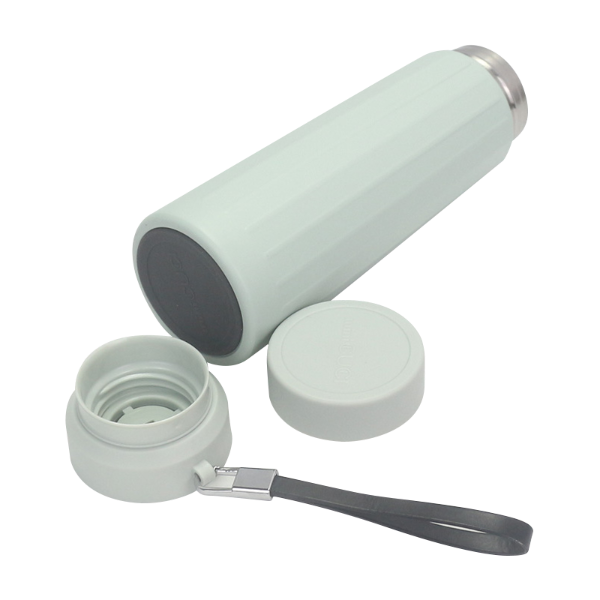
Future vacuum-insulated cups will place greater emphasis on safety, lightweight construction, functionality, and personalization.
Consumers will look beyond basic thermal retention capabilities to consider materials, weight, portability, sealing performance, user experience, and visual design.
For manufacturers, true competitiveness no longer relies solely on low prices; success requires continuous improvement in material selection, product design, manufacturing processes, quality control, and innovation capabilities.
The journey from a sheet of stainless steel to a finished cup that accompanies a consumer in their daily life involves multiple stages, including material processing, forming, welding, vacuum sealing, surface treatment, assembly, and quality inspection.
Though seemingly simple, this small cup integrates technologies from diverse fields such as materials science, mechanical engineering, and product design.
This is precisely why stainless steel vacuum-insulated cups have long remained an essential part of people's daily hydration routines.
Your email address will not be published. Required fields are marked *
* Your email is safe with us, we don't spam.

Our company's products include vacuum flasks, beer mugs, coffee mugs, car tumbler, fire stove and tensile parts, etc.
Phone: +86-13566758039
Tel: +86-0579-87171178
Fax: +86-0579-87171178
E-mail: [email protected]
Add: No.29, Qiaodong Road, Qiaotouzhou Village, Longshan Town, Yongkang, Jinhua, Zhejiang, China.
Copyright © 2026 Yongkang Aijun Industry & Trade Co., Ltd.



 English
 中文简体
中文简体 日本語
日本語 Français
 Español