+86-13566758039


Out in the wilderness, a morning often begins with the familiar hiss of a stove heating water for coffee, while packing up camp in the soft light of sunrise. The kind of container you rely on for this—a basic pot suited for camp cooking or a dedicated kettle—does more than just get your hot drink ready. It affects everything from how much your backpack weighs to the range of meals you can prepare, how long your fuel lasts, and how soon you can shoulder your pack and start hiking. Plenty of backpackers grab their initial boiling vessel without realizing how its features match certain trips better than others, learning the hard way on the trail whether it streamlines their mornings or adds unnecessary hassle. A standard Camping Water Pot shines when you need flexibility for simmering soups, cooking pasta, or handling multiple tasks at the stove, whereas a true kettle excels at bringing water to a boil quickly and pouring it precisely without spills. Grasping these real-world distinctions lets you pick gear that truly fits the way you explore the backcountry, rather than settling for something that forces awkward workarounds and takes away from the joy of being outdoors.
A Camping Water Pot is essentially a tough, cylindrical metal container made for heating water and preparing meals while you're out camping or backpacking. Compared to the pots you use in your home kitchen, these are engineered to handle the rough conditions of the outdoors—whether that's being placed straight into hot campfire embers or getting knocked around in your pack during long hikes over uneven terrain.
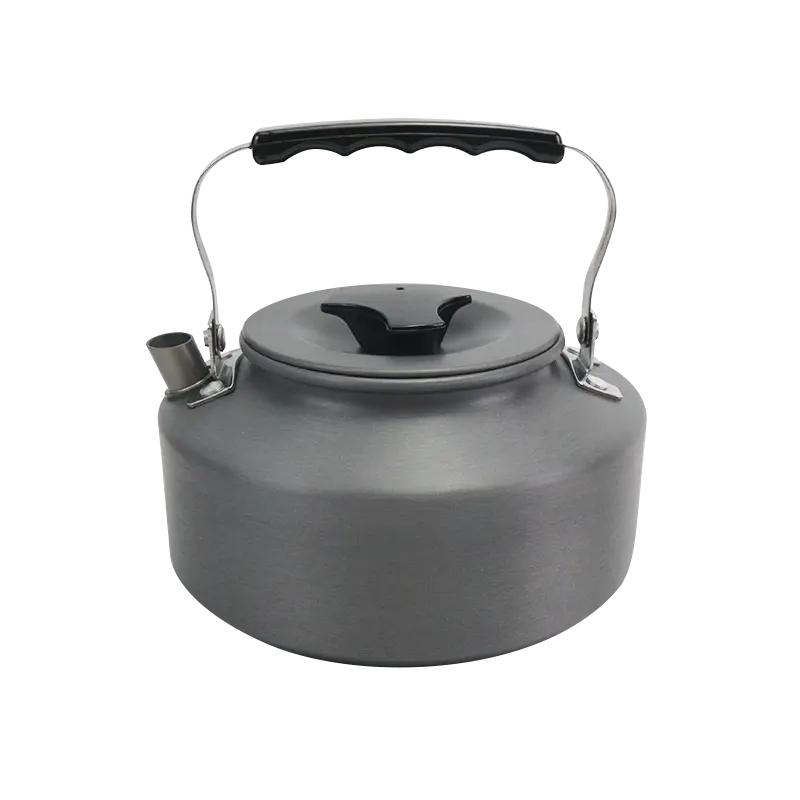
A typical Camping Water Pot has a straightforward cylindrical form, usually with a flat base or one that's gently rounded for steady placement. The sides go straight up or narrow a bit as they reach the top, a design that helps heat spread evenly whether you're using a small backpacking stove, a campfire, or even coals, while also allowing pots to nest snugly with other gear and sit firmly on rough terrain or rocky surfaces.
Nearly all Camping Water Pots come with a tight-fitting lid to trap heat for quicker boiling and keep out dirt, leaves, or bugs that are common in the outdoors. On many models, the lid has built-in drain holes that let you pour off water from noodles, rice, or rinsed veggies without grabbing an extra colander or risking spills.
For handling, the main feature is often a sturdy wire bail that folds flat against the side when packed but flips up to lift or hang the pot over a fire. Plenty of designs add a pair of shorter side handles—usually folding ones—that stay cooler to the touch and give better control when tilting to pour steaming contents safely. These handles are built to distance themselves from direct flames or coated to resist heat, making it easier to manage the pot even when it's full and hot.
Camping Water Pots are crafted from a range of metals, each bringing its own strengths and trade-offs to the trail.
Valued by backpackers, aluminum heats rapidly and distributes heat evenly across the cooking surface. This efficient thermal performance helps reduce fuel consumption and speeds meal preparation. It's noticeably lighter than other options of the same thickness, which matters when you're counting ounces on long hikes. The downside is that aluminum dents more readily under rough treatment, but many users come to like those battle scars as reminders of trips gone by, since the marks rarely hinder performance.
Stainless steel Camping Water Pots attract campers who value toughness above all else. They shrug off hard knocks, hold up well in salty coastal air without rusting, and keep looking sharp even after years of heavy use. Steel won't leach flavors into acidic sauces or fruits, so your food tastes exactly as it should. On the other hand, it transfers heat less quickly and evenly than aluminum, which can result in scorching or sticking without attentive stirring.
Titanium sits at the high end of the spectrum, delivering near-steel toughness at a weight lighter than aluminum. It never corrodes and stays completely neutral with whatever you cook or boil. The catch is the price—titanium is expensive to source and shape. Heat tends to concentrate right beneath the flame, making it ideal for simple boiling tasks but trickier for recipes that need gentle, uniform simmering.
Hard-anodized aluminum takes regular aluminum and gives it a toughened outer layer through an electrochemical process. This upgrade makes the surface far more scratch-resistant and better at fending off corrosion while preserving aluminum's quick, even heating. The matte black finish also hides soot and stains that inevitably build up over open fires.
Camping Water Pots range in size from compact half-liter models that are little bigger than a large mug to generous three-liter ones suited for cooking for several people at once. The right capacity comes down to the number of campers in your party and the kinds of meals you intend to make on the trip.
Most solo hikers prefer Camping Water Pots between 600 milliliters and one liter—plenty for rehydrating a single freeze-dried meal and brewing coffee the next morning without carrying extra empty space or weight. Couples usually opt for something in the one- to 1.5-liter range, which allows them to prepare shared dinners comfortably while still keeping the load manageable. A practical match for three or four people is often a pot in the two- to 2.5-liter range, as its capacity can simplify group meal preparation. For larger base camps, bigger pots are sometimes used to accommodate communal dishes.
A lot of Camping Water Pots feature measurement lines stamped or etched inside, marked in milliliters or ounces to guide you when recipes or dehydrated meal pouches call for precise amounts of water. These markings hold up well to scrubbing and repeated use, staying legible over many seasons on the trail.
The generous wide-mouth design sets Camping Water Pots apart from narrow-necked kettles or water bottles. This large opening makes it simple to scrub the interior clean after meals, drop in ingredients without messes while cooking, stir vigorously without your spoon banging against tight sides, and even pack in snow to melt for water during winter trips.
Plenty of Camping Water Pots have ridged or textured bottoms that boost contact with flames or stove burners for better heat transfer. Certain models go further with built-in heat exchanger rings—wavy metal fins around the base that trap heat that would otherwise escape, squeezing more efficiency out of every gram of fuel and cutting down the time it takes to reach a rolling boil.
The nesting capability of Camping Water Pots is valued by experienced trail users for its space efficiency. The empty space inside becomes secure storage for a fuel canister, your small stove, a lighter, sporks, or even a few snack bars—keeping everything organized and making use of room that would otherwise go wasted in your pack. Many manufacturers offer coordinated sets where fry pans, smaller pots, or cups tuck neatly inside the main Camping Water Pot, turning a full cook kit into a single compact unit that slips easily into any backpack.
Although Camping Water Pots and camp kettles both serve to heat liquids in the backcountry, their shapes and features reveal sharply different intentions. A Camping Water Pot is designed primarily for flexibility: it boils water consistently, but its versatility is seen in preparing full meals—such as oatmeal, soups, dehydrated vegetables, or pasta. The broad mouth and tall, straight sides make stirring easy, let you add ingredients without fuss, and provide plenty of surface area for even cooking.
Kettles, on the other hand, are purpose-built for one job—bringing water to a boil as quickly as possible and then pouring it cleanly through a built-in spout. Their conical bodies and tight openings concentrate heat efficiently, but that same design makes it awkward or impossible to stir inside, layer in foods, or manage anything beyond plain boiling.
In the end, the Camping Water Pot acts as the all-around workhorse of trail cooking: it may take a minute or two longer to reach a full boil than a dedicated kettle, but it opens up a far wider range of real meals. That's why so many backpackers and car campers make it their main—or only—cook vessel, happily trading a bit of boiling speed for the freedom to eat varied, satisfying food miles from any kitchen.
Camping Water Pots have stayed a favorite among outdoor enthusiasts mainly because they're so reliably useful in real-world conditions. When you're heading into remote areas with only what fits in your pack, gear that pulls double—or triple—duty keeps your load lighter and your setup simpler. One sturdy Camping Water Pot can cover every hot meal of the day: brewing coffee or cooking breakfast porridge at dawn, heating water for midday drinks, simmering a hearty dinner, and even holding soapy water for cleanup afterward.
Ruggedness counts for a lot when you're miles from the nearest store and can't just replace broken items. Camping Water Pots are built to take the kind of punishment the trail dishes out—being dropped onto granite, crushed under overloaded packs, left in freezing overnight temperatures or scorching sun, and placed over flickering, uneven flames. With no fragile parts or complicated mechanisms, there's little to snap or fail when you're deep in the backcountry.
Their no-nonsense design also means that even after hard use, a Camping Water Pot usually keeps working just fine. A dinged-up side won't stop water from boiling, a slightly twisted bail handle still lets you lift or hang the pot, and in a pinch, many campers continue using one with minor damage until they can get back to town for a new one.
Camping Water Pots have stayed a favorite among outdoor enthusiasts mainly because they're so reliably useful in real-world conditions. When you're heading into remote areas with only what fits in your pack, gear that pulls double—or triple—duty keeps your load lighter and your setup simpler. One sturdy Camping Water Pot can cover every hot meal of the day: brewing coffee or cooking breakfast porridge at dawn, heating water for midday drinks, simmering a hearty dinner, and even holding soapy water for cleanup afterward.
Ruggedness counts for a lot when you're miles from the nearest store and can't just replace broken items. Camping Water Pots are built to take the kind of punishment the trail dishes out—being dropped onto granite, crushed under overloaded packs, left in freezing overnight temperatures or scorching sun, and placed over flickering, uneven flames. With no fragile parts or complicated mechanisms, there's little to snap or fail when you're deep in the backcountry.
Their no-nonsense design also means that even after hard use, a Camping Water Pot usually keeps working just fine. A dinged-up side won't stop water from boiling, a slightly twisted bail handle still lets you lift or hang the pot, and in a pinch, many campers continue using one with minor damage until they can get back to town for a new one.
| Material | Weight | Profile | Heat Distribution | Durability | Price Range |
|---|---|---|---|---|---|
| Aluminum | Light | Rapid and even | Moderate | Affordable | Affordable |
| Stainless Steel | Heavy | Slower, uneven | High | Moderate | Moderate |
| Titanium | Very light | Quick but spotty | Very high | Premium | Premium |
| Hard-Anodized Aluminum | Light-moderate | Good | High | Moderate-high | Moderate-high |
Solo trekkers live in a completely different world from those who head out with friends or family, and their gear picks show it clearly. GWhen hiking alone, you only need a small amount of hot water at once. Lightweight, compact camping water pots are a logical choice—they reduce pack weight and store neatly. Heating up around half a liter covers a dehydrated evening meal plus the next morning's brew, and if you need more, it's no big deal to fire up the stove again. Keeping things minimal like this helps you stay fresh over long miles with a light base weight.
Couples and small parties face trickier decisions: one bigger pot can work for everybody, or each person can stick with their own setup. Sharing a single Camping Water Pot often turns dinner into a pleasant group ritual, with everyone pitching in to chop, stir, or just chat while the food cooks. A common aspect of shared use is the need to agree on timing, like whether to heat water for coffee or tea first, and to take turns accordingly. Plenty of duos settle on a compromise: one main shared Camping Water Pot for meals, plus individual mugs or tiny vessels for personal drinks.
When you have four or more people around the fire, you really need the roomier capacity that larger Camping Water Pots offer. Trying to feed a hungry crew with repeated boils in a tiny vessel drags supper out forever and tests everyone's patience. A bigger pot lets you heat enough water at once for drinks all around and cook substantial one-pot dishes that get everyone fed quickly and together. The added weight feels worth it once the group grows beyond a couple.
Family trips add extra layers to the choice that go past simple volume math. Kids usually eat smaller servings and often want simpler or different foods than adults. Parents end up multitasking—watching little ones, keeping them away from flames, and serving safely—all at once. A Camping Water Pot with a wide mouth makes pouring easier and cuts down on spills, while sturdy, integrated handles give confident grip when carrying steaming contents out of reach of small hands.
Every camp stove burns fuel at a pace influenced by the shape and features of whatever you're heating on it. Slim, tapered kettles direct flames straight up the sides with little waste, so they typically use less fuel to bring water to a boil than broader pots where heat slips away around the edges. On a short weekend outing, the difference barely registers, but over longer trips those small savings per boil add up to a lighter fuel load that you'll feel in your pack.
Heat exchanger bases tackle this issue head-on with rings of fins that grab heat trying to escape, pulling it back into the vessel for better performance. These upgrades can make a plain pot or kettle far more frugal with fuel, often cutting consumption noticeably without adding much weight. The trade-off pays off especially in chilly weather or at higher elevations, where getting water hot takes longer and burns more gas. Whether the extra fins are worth it comes down to how many days you'll be out and the conditions you'll face.
Aligning the pot's bottom with the burner allows heat to be transferred effectively, helping to make good use of each portion of fuel. Small-diameter canister stoves focus their flame tightly, so they shine with narrow-based kettles that catch all that concentrated heat. Wider Camping Water Pots play better with stoves that spread a bigger, softer flame—like classic liquid-fuel models or simple alcohol burners—covering the base evenly without flames licking uselessly up the sides. Using the wrong match wastes fuel either through spillover heat or patchy heating that leaves parts of the pot cooler.
Once you climb to serious altitudes, thinner air changes everything by lowering the boiling point and stretching out cook times. Water reaches a rolling boil at cooler temperatures high up, which means longer stove runs and higher fuel use overall. Smart vessel choices help ease the penalty somewhat, but no design beats basic physics. When packing fuel for mountain trips, it's wise to plan on the generous side to cover these unavoidable extras.
Honest assessment of typical meal patterns reveals whether multi-purpose cookware provides value or unnecessary capability. Campers subsisting primarily on freeze-dried pouches and instant oatmeal utilize vessels solely for boiling water, making specialized kettles logical choices. Adding hot water to prepared meals requires no cooking skill, allowing focus on other camp tasks while water heats. This approach minimizes cleanup demands and reduces time spent managing food preparation.
However, wilderness travel extending beyond several days often benefits from dietary variety that instant meals cannot provide. Fresh ingredients carried from trailheads or resupply points enable more satisfying dinners that boost morale during challenging expeditions. Sautéing vegetables, browning meat, simmering sauces, and preparing rice or pasta demand vessels accommodating these techniques. The wider openings and straight walls of camping pots support these methods where narrow kettles fail completely.
One-pot meal strategies combine ingredients sequentially within single vessels, building complex flavors while minimizing equipment needs. Starting with aromatics cooked in oil, adding proteins and vegetables, then introducing liquids for simmering creates restaurant-quality results in wilderness settings. These techniques transform camping meals from utilitarian fuel into genuine culinary experiences that elevate entire trips. Mastering one-pot cooking opens creative possibilities that kettle-only systems cannot approach.
Winter camping necessitates melting snow for water, a task that kettles handle poorly due to limited capacity. Snow occupies roughly ten times the volume of resulting water, requiring vessels that accept substantial quantities of material. Wider pot openings permit efficient snow loading and compaction as melting progresses. The temperature regulation needed to prevent scorching during the melting process also benefits from pot designs that distribute heat more evenly.
Gram counters obsess over equipment specifications, comparing items through spreadsheets that total pack weights to decimal precision. While this approach identifies obvious inefficiencies, it sometimes misses systemic interactions between components. A lighter kettle paired with a separate small pot for occasional cooking might total more weight than a single versatile camping pot serving both functions. Analyzing complete systems rather than individual items reveals truer weight implications.
Nesting capabilities multiply effective packing efficiency by consolidating related items into unified packages. Camping pots accommodate fuel canisters, compact stoves, lighters, and utensils within their interior volumes, protecting these items while occupying no additional pack space. This organization simplifies access and prevents small components from migrating throughout pack contents. Kettles with narrow tapered shapes offer less internal volume for nesting, though innovative collapsible designs compress dramatically when empty.
Psychological weight differs from measured kilograms, affecting hiking enjoyment through perceived burden. Carrying equipment that performs multiple functions well feels lighter than hauling specialized items serving single purposes. The mental satisfaction of versatile gear reduces the subjective burden even when objective weights remain identical. This phenomenon explains why some hikers tolerate heavier multi-tools while others prefer lighter individual implements despite equivalent total mass.
Seasonal variations noticeably influence suitable weight trade-offs. Summer backpacking with abundant water sources and mild temperatures permits lighter systems focused on efficiency. Winter expeditions demanding snow melting, extended cooking times, and cold-weather reliability justify additional weight for robust designs. Adjusting gear selections across seasons keeps systems appropriate for prevailing conditions rather than forcing year-round compromises.
| Scenario | Ideal Capacity | Design Priority | Weight | Budget |
|---|---|---|---|---|
| Solo Ultralight | Half to one liter | Minimal weight | Under 200g | Under 200g |
| Couple Backpacking | One to one and half liters | Balanced | 250-400g | 250-400g |
| Group Base Camp | Two to three liters | Capacity | 500-800g | 500-800g |
| Winter Expedition | One and half to two liters | Snow melting | 300-600g | 300-600g |
To see if a Camping Water Pot's versatility is worthwhile, consider the actual meals prepared on the trail. This reveals whether its design serves a purpose or includes features that remain unused. If your trips revolve around pour-and-eat freeze-dried dinners and packets of instant oats or couscous, you're basically only ever boiling water to rehydrate food. In that case, a dedicated kettle makes far more sense—it gets the job done faster with less fuel, leaving you free to set up camp or relax while the stove runs. Cleanup stays minimal, and you spend almost no time fussing over the cooking process.
Longer outings, though, usually call for more interesting food to keep spirits high when the days get tough. Bringing fresh produce from the trailhead, picking up ingredients at a resupply, or even foraging a bit lets you put together real dinners that feel rewarding after hard miles. Browning onions or rehydrated meat, softening carrots, cooking rice or noodles, and letting a sauce come together all need a vessel that gives you room to stir and layer flavors. The broad mouth and upright sides of a Camping Water Pot handle these steps easily, while a narrow kettle simply can't accommodate them.
One-pot recipes shine in this setup: you start by heating a little oil and cooking garlic or spices, toss in proteins and veggies to pick up flavor, then add water or broth and grains to finish everything together. The result tastes far better than anything from a pouch and still only dirties a single container. Turning basic trail ingredients into meals that actually excite you changes the whole feel of a trip, and those possibilities stay out of reach if you're limited to a kettle.
Winter trips add another strong case for pots over kettles when drinking water comes from melting snow. Loose snow takes up a huge amount of space before it turns liquid, so you need a container that can hold a big initial load and let you pack in more as it melts down. A Camping Water Pot's wide opening makes scooping and compressing snow straightforward, and its broader base spreads heat more evenly to avoid burning the thin layer of water at the bottom while the bulk slowly liquefies.
Cooking over a wood fire taps into that old-school pioneer spirit lots of campers hold dear, linking today's trips back to the days of early explorers pushing through untouched lands. There's nothing like tending a snapping blaze while your meal bubbles on a spit or hangs above the coals—an experience that leaves gas stoves feeling sterile and distant. The catch is that open flames deliver fierce, patchy heat and direct licks of fire, so your cookware has to be up to the task without buckling or scorching food.
Camping Water Pots with broad, flat bottoms sit steady on grates, rocks, or right in the embers, making them naturals for campfire duty. Their tough build shrugs off sudden blasts of heat without twisting out of shape, and the wire bail handles let you dangle them from a tripod or stick setup over the flames just like in the old days. That simple, no-frills shape forgives the wild temperature swings and uneven burning you get with gathered wood.
Kettles look picturesque by the fire but often falter in practice. Skinny bases wobble on lumpy ground, and their skinny, pointed bottoms funnel heat into hot spots that can burn whatever's inside before the rest catches up. Those spouts or whistles frequently have plastic bits that melt away in the flames. You can certainly find durable all-metal campfire kettles made for this purpose, but they are specialized gear that many people choose to carry only when a fire is part of the planned use.
Leave No Trace rules and local bans are curbing open fires more and more, especially in fragile spots, high country, or dry spells when sparks could spell disaster. Many areas flat-out forbid them, nudging campers toward stoves where sleek pots tuned for even burner heat take over. Checking the rules ahead of time saves you from dreaming up flame-kissed feasts only to roll up and find yourself stuck with cold granola.
Keeping your cookware clean hits different challenges when you're miles from a sink and hot tap water. Camping Water Pots with their big, open tops make the job straightforward—you can easily get a hand or scrubber inside to wipe down every surface and rinse away stuck-on bits completely. The smooth, uncomplicated shape has almost no hidden corners for gunk to hide in and rot. Most of these pots can handle rough treatment like scouring with sand or river grit, or even a quick boil with clean water to kill off germs.
Kettles run into real trouble because of their spouts. Those tight passages build up scale and grime fast, especially if you're pulling water from streams or lakes that carry silt or minerals. Getting a brush or cloth far enough in to clean properly usually calls for skinny bottle brushes or improvised tools, and if you skip it, the spout can partly clog, making pouring messy and giving bacteria a place to grow. Staying on top of it takes extra effort that a basic Camping Water Pot simply doesn't demand.
Whistles and their little moving parts add another headache if you ever try cooking food in a whistling kettle. Small springs or balls can trap food particles, which may result in rust or undesirable odors over time. They stay trouble-free when the kettle only boils drinking water, but turn into a nuisance the moment you branch out into actual meals.
If all you're doing is heating clean water for drinks or rehydrating pouches, a quick cold rinse often does the trick. Real cooking with oils, meats, or grains leaves stickier residue that needs hot water and some elbow grease to lift off fully. A drop of biodegradable soap helps, but you still have to pack out gray water or scatter it far from lakes and streams to follow Leave No Trace rules. Finding the right balance between staying hygienic and protecting the surroundings comes down to knowing the local guidelines and adapting your routine to the place you're visiting.
Pouring hot water precisely might feel like a small perk until you're trying to top off a skinny-necked bottle or thermos from the broad rim of a Camping Water Pot. Splashes not only waste heat and make a soggy mess on your gear, but they can also scald hands or legs in the tight space of a campsite. A proper spout directs the stream exactly where you want it, letting you fill mugs, bottles, or pouches cleanly and without stray drips—especially handy when you're making several hot drinks at once for the group.
Certain coffee styles that reward careful technique shine with that kind of control. Pour-over setups need a steady, deliberate flow that the plain edge of a Camping Water Pot can't deliver reliably. The long, curved gooseneck on dedicated trail kettles lets you circle the grounds evenly and adjust speed on the fly, pulling out richer, more balanced flavors from good coffee. For anyone who treats morning brew seriously on the trail, that level of command feels necessary rather than fancy.
That said, plenty of standard backcountry meals don't care about finesse at all. Freeze-dried entrees, instant oatmeal, or soup mixes are forgiving—you just dump in hot water roughly and stir. When your menu leans heavily on those quick-prep options, the pinpoint pouring of a spouted kettle adds little real advantage. A careful tilt of the Camping Water Pot or holding the lid slightly ajar to form a makeshift channel works perfectly fine.
Safety also tips the scale toward controlled pouring, especially in busy camp settings with several people moving around. Spilling boiling water can cause painful burns in an instant, and the risk grows when kids are part of the trip. A spout keeps the flow contained and predictable, lowering the odds of accidents, and the overall design makes the vessel less likely to tip over and empty its scalding contents in one disastrous motion.
Thru-hikers chasing hundreds of miles on foot obsess over every ounce in their pack because they're hauling it twenty or thirty miles a day for months on end. That relentless focus pushes many toward featherweight kettles matched with high-efficiency stoves—the combo delivers just enough hot water for daily needs while keeping the load as low as possible. Plenty of long-trail veterans accept the repetitive menu of rehydrated pouches as a fair price for the energy saved by carrying less weight on their backs.
Weekend campers pulling up to drive-in sites operate in a whole different world where pack weight barely matters. With the car parked steps away, people happily tote along full kitchen kits: big burners, multiple pans, even coolers full of fresh food. Families often set up elaborate outdoor cooking stations that feel almost like home, turning out multi-course spreads that make the trip more enjoyable. In these setups, roomy Camping Water Pots fit perfectly, giving space for creative, large-batch meals that would be impractical on the trail.
High-altitude climbing throws gear into brutal conditions where dependable performance beats shaving a few grams. Freezing cold, howling winds, and low-oxygen air test everything you bring, so climbers often choose sturdier Camping Water Pots that have proven they can take abuse without failing. The extra durability matters more than ultralight construction when a cracked pot could mean trouble. Being able to melt large batches of snow quickly for drinking water also becomes a serious safety factor in places where open streams stay locked under ice.
Bike tourers and canoe or kayak campers strike a middle ground—they still power themselves forward, but wheels or hulls handle weight far better than shoulders do. This added portability creates space for moderately weighted Camping Water Pots, which offer balanced practicality without requiring the strict weight limits of dedicated thru-hiking. The mechanical help from pedals or paddles lets riders enjoy a few comforts, like varied hot meals at camp, that noticeably lift spirits over long days on the road or river.
The upfront price of camping cookware tells only half the story when you're figuring out what really costs less in the long run. A solidly built vessel that holds up for decades and countless trips ends up cheaper per outing than bargain options that wear out or break after just a few seasons. For dedicated campers who log serious time outdoors, the higher quality materials, stronger build, and smarter features easily pay for themselves through years of steady service.
Newcomers dipping their toes into camping often hesitate to drop serious money on top-tier gear, and for good reason—they're not yet sure if weekend trips will turn into a lifelong habit or fade away after a handful of outings. Affordable entry-level options serve well for initial outings, offering practical performance without a large financial commitment. Once someone realizes they're hooked on the outdoors, stepping up to better-made equipment feels like a natural and worthwhile move.
Day-to-day upkeep stays cheap and simple for nearly all trail cookware, though fancier kettles sometimes need spare parts down the line. Whistles stop working, handles loosen or snap from constant use, and spouts get dinged in transit. A basic Camping Water Pot, by contrast, asks for nothing more than routine washing and keeps performing flawlessly until it's physically too battered to use. That near-maintenance-free reliability is a big part of why so many experienced campers trust them as unbreakable staples.
Good resale markets give campers an escape hatch if a piece turns out to be the wrong fit. Well-made Camping Water Pots and other gear from reputable brands hold strong value secondhand, letting owners recover a healthy chunk of what they paid. The same used market also opens doors for budget-conscious buyers to pick up high-end items at lower prices, as long as they check carefully for wear and make sure the piece still has plenty of life left.
| Consideration | Camping Pot Advantage | Kettle Advantage |
|---|---|---|
| Multi-use cooking | Strong | Weak |
| Boiling speed | Adequate | Strong |
| Weight efficiency | Moderate | Strong |
| Pour control | Weak | Strong |
| Group capacity | Strong | Moderate |
| Durability | Strong | Moderate |
| Price value | Strong | Moderate |
Summer trips in warm weather with streams and lakes nearby make for easygoing camping where gear flaws rarely bite you. Mild nights and plenty of water let you prioritize ultralight, quick-boiling setups without worrying much about comfort or safety slipping. The forgiving surroundings mean you can chase minimal weight and straightforward routines without real downsides.
Shoulder seasons like spring and fall throw more curveballs, calling for tougher, more adaptable choices. Early-season snowmelt leaves rivers icy cold, stretching out heating times, while late-year days can flip from balmy to frosty fast. Picking equipment that leans toward ruggedness and flexibility—even if it adds a little weight—pays off when the weather turns sour without warning.
Winter camping flips the script completely. Turning snow into drinking water eats huge amounts of fuel and demands big volumes at a time. Roomy Camping Water Pots become indispensable for packing in loads of snow and melting it steadily, and their sturdy build holds up to freezing temperatures and rough handling. The wide mouth keeps snow from jamming up like it would in a skinny kettle, letting you keep topping off the pot as the pile shrinks down.
Year-round campers who hate switching kits every season often settle on all-purpose gear that works decently across the calendar. These middle-of-the-road choices give up a bit of peak performance but spare you the hassle and cost of separate summer and winter setups. A dependable Camping Water Pot capable of handling quick summer boils and winter snow melts alike often proves to be a sound choice over time.
Individual priorities and values ultimately determine which equipment serves any particular camper effectively. Someone treasuring morning coffee rituals might happily carry a specialized kettle despite its limited functionality, valuing the enhanced beverage quality it enables. Another person might prefer the flexibility of a camping pot that accommodates varied cooking while accepting slower boiling times as minor inconvenience.
Risk tolerance influences equipment choices in subtle ways. Conservative campers favor versatile gear providing multiple capabilities and backup options should primary plans fail. These personalities feel more comfortable carrying a pot that cooks meals if freeze-dried supplies run short or enables snow melting during unexpected weather changes. Risk-accepting minimalists embrace specialized efficiency, confident in their ability to adapt when circumstances demand flexibility their focused systems lack.
Aesthetic preferences and emotional connections to specific gear sometimes override pure functional considerations. A vintage camping pot inherited from a parent carries sentimental value transcending its objective performance. Similarly, beautiful enamelware kettles create appealing camp scenes that enhance overall experiences beyond utilitarian metrics. These factors legitimately influence personal equipment decisions even when they contradict efficiency optimization.
Learning individual preferences requires actual field experience rather than theoretical analysis. Borrowing or renting different systems before purchasing permits testing various approaches under realistic conditions. Many outdoor enthusiasts discover that their anticipated priorities differ from actual needs once experiencing various equipment in practice. This experimentation phase proves valuable for developing genuine understanding of personal requirements.
Deciding between a Camping Water Pot and a dedicated kettle goes deeper than just comparing two pieces of gear—it touches on what kind of camper you are, what you want out of your time outside, and whether you lean toward streamlined speed or broader usefulness. Neither one is outright better; each shines in its own setting and comes up short in others.
Picking the right tool for the trips you actually take keeps your gear working for you instead of against you. A weekend drive-in camper won't get much use from a featherweight kettle built for covering big miles on foot, just as a long-distance thru-hiker rarely needs the bulk of a big, do-everything pot that makes more sense at a comfortable base camp. Taking an honest look at your usual outings and eating habits points you toward the piece that truly fits.
Tastes and needs naturally shift as you spend more time outdoors. Most people start with simple, all-around gear that handles the basics well, then gradually refine their kit based on real trail experience. Adding pieces slowly over time lets you put together separate setups for different kinds of trips—one tuned for lightweight speed, another for relaxed group cooking—without forcing every piece to be a jack-of-all-trades compromise.
Reliable companies that focus on real-world performance rather than flashy ads turn out cookware that holds up season after season in tough conditions. Finding brands that deliver solid, long-lasting tools makes a real difference in how enjoyable camping feels, because good gear quietly supports your plans instead of creating extra headaches. At Aijunware, we know the right Camping Water Pot or kettle can turn trail cooking from a hassle into something you actually look forward to, and that's why we're dedicated to offering dependable essentials that stand by adventurers on every kind of wilderness trip.
Your email address will not be published. Required fields are marked *
* Your email is safe with us, we don't spam.

Our company's products include vacuum flasks, beer mugs, coffee mugs, car tumbler, fire stove and tensile parts, etc.
Phone: +86-13566758039
Tel: +86-0579-87171178
Fax: +86-0579-87171178
E-mail: [email protected]
Add: No.29, Qiaodong Road, Qiaotouzhou Village, Longshan Town, Yongkang, Jinhua, Zhejiang, China.
Copyright © 2026 Yongkang Aijun Industry & Trade Co., Ltd.



 English
 中文简体
中文简体 日本語
日本語 Français
 Español