+86-13566758039


As vacuum-insulated flasks become widely used in daily life, office settings, travel, and outdoor activities, both consumers and buyers are placing increasingly high demands on product quality. For buyers, these flasks must not only offer excellent thermal insulation but also meet specific quality requirements regarding material safety, sealing integrity, corrosion resistance, structural design, and durability.
So, which quality standards should be the primary focus when sourcing these products?
Material safety is the foremost concern when sourcing vacuum-insulated flasks, particularly for components that come into direct contact with drinking water, such as the inner liner, lid, and sealing ring.
Currently, the inner liners of common stainless steel vacuum flasks are typically made from 304 or 316 stainless steel. 304 stainless steel offers good corrosion resistance and is suitable for most daily drinking scenarios, whereas 316 stainless steel provides superior resistance to certain corrosive substances; the choice between them should be based on product positioning and intended use.
In addition to the stainless steel itself, it is essential to verify that plastic lids, silicone sealing rings, and other components in contact with drinking water comply with the food-contact material regulations of the target market.
Buyers sourcing for export must confirm—based on the regulations of the destination country or region—whether the supplier can provide relevant material certifications, food-contact test reports, and other necessary documentation. One cannot simply assume compliance with all food safety requirements based solely on the material name listed on the product.
Thermal insulation performance is a core quality indicator for vacuum flasks, directly influencing the user experience and market competitiveness.
When sourcing, the following aspects should be prioritized:
It is important to note that the heat retention duration is not a fixed value independent of testing conditions. For instance, any advertised heat retention time should clearly specify the corresponding test methods and acceptance criteria; data provided by different manufacturers cannot simply be compared directly.
Purchasers can specify heat retention standards, test durations, and minimum temperature requirements in their orders, using the test results as the basis for product acceptance.
Insulated cups are frequently placed in backpacks, handbags, or car cup holders; therefore, sealing performance is equally important.
During procurement, key areas to inspect include the fit between the lid and the cup mouth, the installation of the silicone sealing ring, the threading structure, and the sealing design of the drinking spout.
For screw-top insulated cups, leak tests should be conducted with the lid fully closed by inverting or laying the cup on its side under specified conditions. For straw cups, pop-top cups, and push-button lids, distinguish closed-lid sealing tests from spill-resistance checks during drinking. Do not assume an open straw or drinking spout is leak-proof; evaluate each configuration according to its intended use and stated claims.
If the product is marketed for outdoor use or as a portable travel cup, it is advisable to conduct additional tests simulating transportation and daily carrying scenarios to ensure consistent sealing performance under reasonable conditions of use.
Note that leak-proof testing must clearly define the lid status, test duration, water volume, and testing method; a product cannot be deemed completely leak-proof based solely on a simple inversion check.
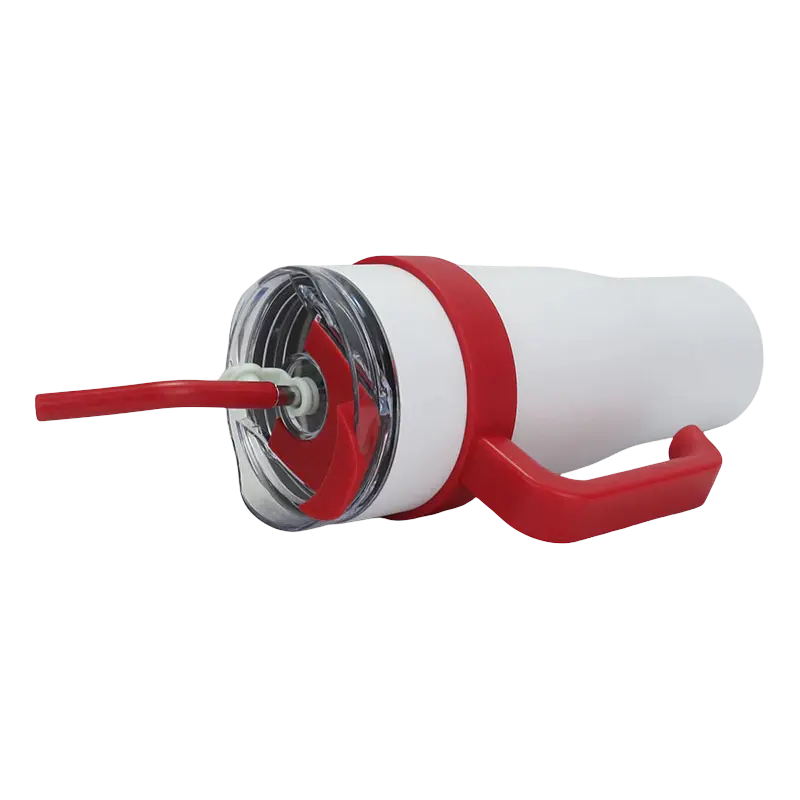
As insulated cups come into contact with hot water, tea, coffee, and other beverages during long-term use, the corrosion resistance of the inner liner is crucial.
Purchasers should focus on the suitability of the stainless steel material, the surface quality of the inner liner, the treatment of welded areas, and whether the cup is prone to retaining stains or odors after cleaning.
For products featuring paint, powder coating, pad printing, or other surface treatments, inspections should also cover coating adhesion, wear resistance, and durability in common usage environments to prevent issues such as paint chipping, peeling, scratching, or significant fading.
Additionally, durability checks should be performed on components such as the lid opening/closing mechanism, handle connections, straw interfaces, and the base of the cup. For reusable products, testing protocols—such as opening/closing cycles, drop tests, or transport simulations—can be established based on the product's positioning.
Corrosion resistance and durability affect not only the product's appearance but also its service life and after-sales costs.
Appearance quality is a common area where issues are identified during procurement inspections and where customer complaints frequently arise.
Inspections should check for obvious dents, scratches, deformation, color variations, stains, or surface coating defects on the cup body. The rim should be smooth and level, the base stable, and welded areas free from defects that could compromise usability or safety.
For customized products, verify that the logo's position, size, color, and clarity match the approved sample; check that printed patterns do not easily peel off; and ensure the accuracy of information on color boxes, labels, and barcodes.
Buyers should ideally confirm and sign off on a sample before mass production begins and incorporate appearance acceptance standards, color tolerances, packaging requirements, and defect classifications into the quality agreement to minimize disputes arising from differing interpretations.
The overall quality of an insulated cup depends not only on the body but also significantly on the lid and accessories.
The lid should fit precisely and open and close smoothly, without noticeable sticking, looseness, or difficulty in locking. Silicone sealing rings must be securely installed—resisting accidental detachment—and comply with applicable regulations for food-contact materials.
For products featuring straws, handles, tea infusers, or push-button mechanisms, the assembly strength, ease of use, and ease of cleaning of these accessories must also be evaluated.
When sourcing multifunctional insulated cups, pay special attention to the quality stability of complex structural areas, as these are prone to issues such as leakage, breakage, or operational inconvenience.
An insulated cup should not emit any noticeable, unusual odors after proper cleaning prior to normal use. During procurement, check the cup body, lid, and sealing ring for abnormal smells, and verify that the inner liner is easy to clean and free from stubborn residue or hard-to-reach "dead zones." If a product emits a distinct, unpleasant odor, the root cause—such as raw materials, sealing rings, plastic components, coatings, or production cleaning processes—should be investigated rather than simply masking the issue by rinsing the product. Odor checks do not replace applicable food-contact compliance testing.
For products featuring tea infusers, straws, or complex lid designs, ease of disassembly, cleaning, and reassembly should also be considered.
Packaging quality directly impacts the condition of vacuum-insulated cups during transit—particularly for export orders, which often involve multiple rounds of loading/unloading and long-distance transport.
Buyers should verify that appropriate packaging methods are used to prevent scratches, collisions, and crushing, and confirm that inner boxes, outer cartons, and cushioning materials are adequate for the anticipated shipping conditions.
For large-volume orders, the strength of outer cartons, stacking stability, and overall packaging protection should be evaluated based on product weight, packing configuration, and shipping routes.
If the product is destined for retail channels, details such as color box design, product labeling, barcodes, warning information, and client-specified packaging standards must be verified to prevent issues with warehouse entry or sales caused by non-compliant packaging.
For bulk procurement, inspecting samples alone is insufficient; a clear, actionable quality inspection process must be established.
Buyers may request the following information from suppliers:
For export products, applicable regulations, standards, testing requirements, and document validity must be confirmed against the specific demands of the target market. Requirements vary by country and region; a test report valid for one market cannot simply be assumed to serve as proof of compliance globally.
Additionally, it is advisable to clearly outline sampling plans, defect classifications, acceptance criteria, procedures for handling non-conforming goods, and the allocation of liability for quality issues within the procurement contract.
Beyond the quality standards of the product itself, a supplier's production capacity and quality management capabilities are equally important.
Buyers should focus on evaluating aspects such as raw material management, production process control, vacuum testing capabilities, finished product inspection procedures, order delivery reliability, and after-sales support.
For custom-made vacuum flasks, attention should also be paid to the supplier's ability to accurately adhere to sample approval requirements, color management, logo application techniques, and packaging specifications, as well as their ability to identify potential quality risks prior to mass production.
Sample testing can be conducted before placing a formal order; for large-volume orders, it is advisable to arrange for in-process inspections or pre-shipment inspections to ensure the delivered products align with the approved samples and contractual requirements.
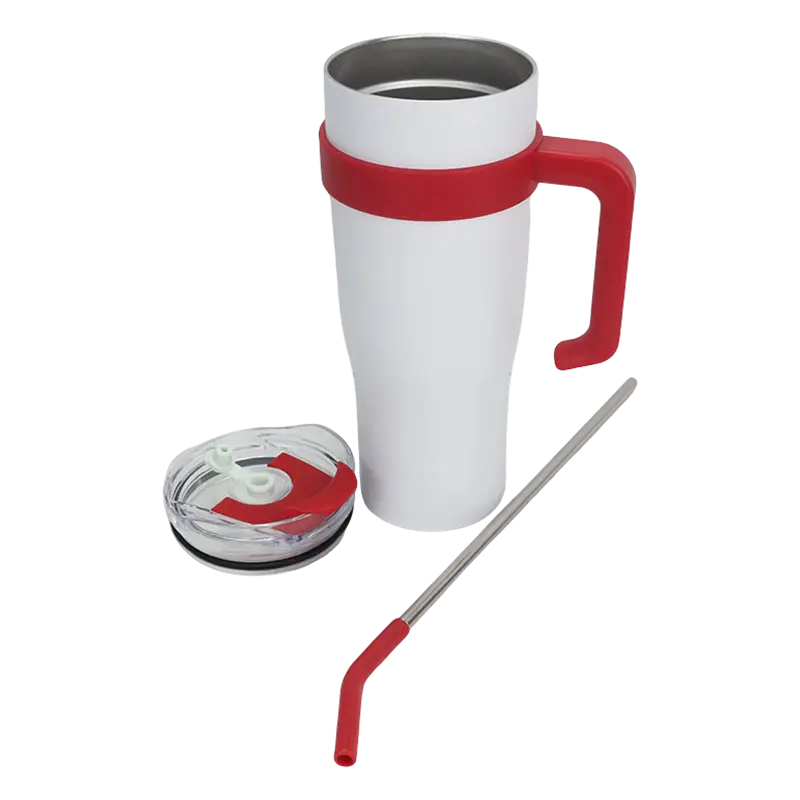
When purchasing vacuum flasks, one should not focus solely on price, appearance, or the thermal retention duration advertised in promotional materials. Factors such as material safety, thermal performance, sealing integrity, corrosion resistance, structural durability, surface finish, packaging protection, and quality documentation are all critical to product quality.
For buyers, the most effective approach is to establish clear quality standards in advance—based on product positioning and the target market—and to incorporate key testing conditions and acceptance criteria into both the procurement contract and inspection procedures.
Only by establishing a comprehensive quality control system that covers everything from material selection and manufacturing to finished product acceptance can buyers mitigate procurement risks, enhance product consistency, and lay a solid foundation for long-term partnerships and market success.
Your email address will not be published. Required fields are marked *
* Your email is safe with us, we don't spam.

Our company's products include vacuum flasks, beer mugs, coffee mugs, car tumbler, fire stove and tensile parts, etc.
Phone: +86-13566758039
Tel: +86-0579-87171178
Fax: +86-0579-87171178
E-mail: [email protected]
Add: No.29, Qiaodong Road, Qiaotouzhou Village, Longshan Town, Yongkang, Jinhua, Zhejiang, China.
Copyright © 2026 Yongkang Aijun Industry & Trade Co., Ltd.



 English
 中文简体
中文简体 日本語
日本語 Français
 Español