+86-13566758039


Stainless steel vacuum flasks are widely used for daily hydration, office work, outdoor activities, and travel due to their excellent thermal insulation, durability, and portability. However, some consumers notice an unpleasant odor inside the flask, particularly after storing beverages for extended periods, using a new flask, or failing to clean it thoroughly. This not only affects the drinking experience but can also raise concerns about product quality.
So, why do odors develop inside stainless steel vacuum flasks? Does an odor indicate a problem with the material? How can this be effectively prevented and resolved?
A slight odor in a newly purchased stainless steel vacuum flask does not necessarily indicate a problem with the material of the inner liner. The odor may originate from various components.
First, accessories such as the lid, sealing ring, and straw are typically made of plastic, silicone, or other polymer materials. Trace amounts of volatile odors may remain from the production, processing, packaging, and storage stages. This is especially true for sealing rings and plastic lids; because they have limited exposure to air, odors do not dissipate quickly, and a material-specific scent may be noticeable upon unboxing.
Second, if the flask is not adequately cleaned, dried, or ventilated during production and packaging, residual odors from the manufacturing process or packaging materials may persist.
For new flasks, it is recommended to disassemble removable parts and wash them thoroughly with warm water and a neutral detergent, followed by a complete rinse and air-drying. If the odor persists or is noticeably pungent, or if signs such as rust spots or abnormal discoloration appear on the flask body, discontinue use and contact the retailer or manufacturer for inspection.
A common cause of odors inside the flask is beverage residue.
Tea, coffee, milk, and sugary drinks contain various types of organic compounds. If beverage residue remains on the inner walls, bottom, rim, or sealing ring after use, these residues can develop an odor over time.
For instance, components in tea can easily form stains on the inner walls; coffee oils may adhere to the walls and, if allowed to accumulate, produce a stale smell; and if milk or dairy-based drinks are not washed away promptly, microorganisms can proliferate under the right conditions, leading to unpleasant odors.
Therefore, even if a thermal flask is primarily used for water, daily cleaning should not be overlooked. For flasks used to hold coffee, tea, or other beverages, it is recommended to empty and wash them promptly rather than leaving residue inside for extended periods.
Although the inner lining of a stainless steel thermal flask usually has a smooth surface, this does not mean it stays clean on its own.
Areas such as the lid threads, sealing ring grooves, the inside of straws, and the rim connection points are often more prone to accumulating grime than the main body of the lining. If these areas are not cleaned regularly, residual beverage and moisture can become sources of odor.
Additionally, screwing the lid on immediately after washing or storing the flask sealed while moisture remains inside keeps the interior damp, hindering the dissipation of odors.
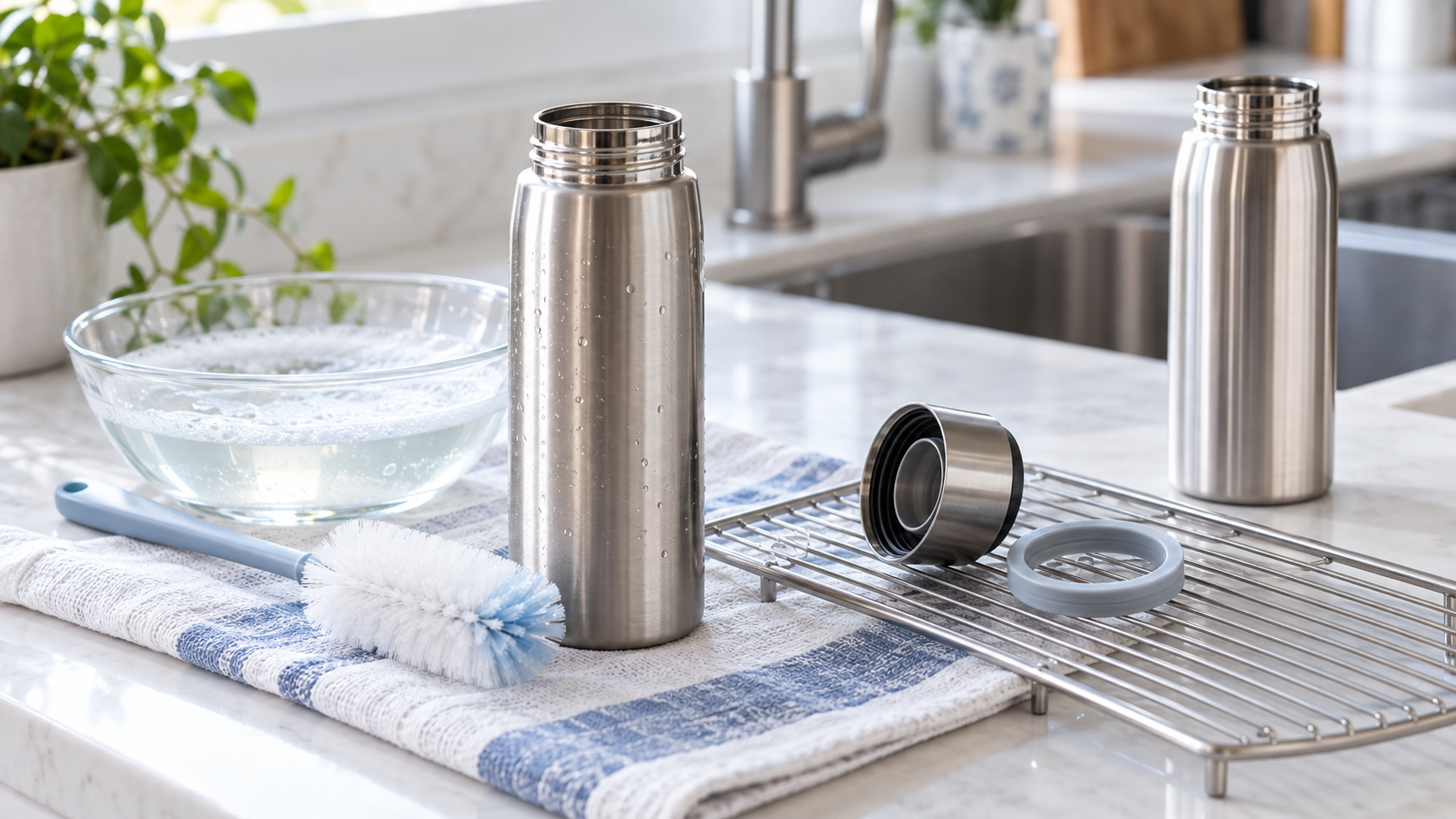
Proper cleaning methods include:
Note that you should follow the product instructions during cleaning and avoid using tools or chemicals that could damage the inner lining's surface or the sealing components.
While the stainless steel material is a key factor influencing a thermal flask's corrosion resistance and user experience, any odor arising from the inner lining cannot be attributed solely to the stainless steel itself. Common 304 stainless steel offers good corrosion resistance and is widely used in food-contact products. 316 stainless steel contains molybdenum, providing superior corrosion resistance in certain corrosive environments. However, actual performance depends on factors such as material composition, manufacturing quality, surface treatment, cleaning methods, and the specific usage environment.
If a vacuum flask uses food-grade stainless steel that meets relevant standards and undergoes proper manufacturing and cleaning, the inner liner generally should not emit a persistent, noticeable odor under normal use.
However, improper material selection, substandard manufacturing or surface treatment, or corrosion of the inner liner can negatively affect the user experience. If a product exhibits persistent odors, an unusual metallic taste, rust spots, or visible signs of corrosion, the cause should be investigated rather than simply trying to mask the smell through cleaning.
The materials used for the lid and sealing ring also warrant attention. Even if the inner liner is made of high-quality stainless steel, odor issues can still arise if the accessories emit a strong smell or are not cleaned thoroughly.
Different methods can be used depending on the source of the odor.
This is the most fundamental and highly recommended cleaning method. Use a soft sponge or cleaning brush to wash the inner liner, paying special attention to the rim, threads, and bottom of the flask.
After cleaning, leave the lid open to allow the interior to dry completely. Detachable parts like sealing rings and straws should be dried separately to prevent odors from redeveloping in a damp environment.
Use a cleaner specifically designed for stainless steel vacuum flasks and follow the product instructions to remove stubborn stains. Rinse thoroughly after cleaning to ensure no detergent residue affects the taste of your beverages.
If the odor persists after cleaning the inner liner, inspect the lid, sealing ring, and straw individually. Some odors actually originate from these accessories rather than the stainless steel inner liner itself.
It is not advisable to use strong acids, strong alkalis, chlorine-based bleaches, or other chemicals that could damage the stainless steel or sealing components. Hard tools, such as steel wool, can also scratch the surface of the inner liner. Before using any specialized cleaning product, verify that it is suitable for the specific materials involved.
If a noticeable odor persists after thorough cleaning and drying, especially if accompanied by corrosion, rust spots, or abnormal discoloration, discontinue use and contact the manufacturer for inspection.
For manufacturers of vacuum-insulated cups, minimizing odors depends not only on proper consumer use but also on product design, raw material selection, and production quality control.
First, inner liner materials must be carefully selected to meet relevant food-contact safety requirements, and the quality of raw materials must be strictly controlled. Second, attention should be paid to the material quality of accessories such as lids, sealing rings, and straws to prevent distinct material odors from affecting the overall user experience.
Standardized processes for cleaning, drying, assembly, and packaging are equally important during production. After processing, components must be properly cleaned and fully dried before packaging. For products with complex lid structures or numerous accessories, ease of disassembly and cleaning should also be considered.
Furthermore, manufacturers can mitigate quality risks through incoming material inspections, visual checks, cleanliness assessments, and necessary safety tests regarding materials and food contact. For export orders, testing protocols and compliance standards should be selected based on the target market's regulations and specific customer requirements.
Effective product design should balance thermal insulation performance, sealing integrity, and aesthetic quality with the convenience of daily cleaning, thereby enhancing the long-term user experience.
Odors arising from the inner liner of a stainless steel vacuum cup may stem from the scent of materials in new cups, beverage residue, incomplete cleaning, storage in humid conditions, or issues with accessories like lids and sealing rings; such odors do not necessarily indicate a quality defect in the stainless steel liner itself. The likelihood of unpleasant odors developing can be effectively reduced through timely washing, thorough drying, and regular cleaning of detachable parts, as well as by selecting products made from compliant materials and manufactured to high standards.
For manufacturers of vacuum-insulated flasks, the use of high-quality stainless steel, sound structural design, reliable components, and strict quality control during production forms the essential foundation for enhancing product quality and building consumer trust.
An excellent vacuum-insulated flask must not only offer reliable thermal performance but also excel in terms of hygiene, durability, ease of cleaning, and the long-term user experience.
Your email address will not be published. Required fields are marked *
* Your email is safe with us, we don't spam.

Our company's products include vacuum flasks, beer mugs, coffee mugs, car tumbler, fire stove and tensile parts, etc.
Phone: +86-13566758039
Tel: +86-0579-87171178
Fax: +86-0579-87171178
E-mail: [email protected]
Add: No.29, Qiaodong Road, Qiaotouzhou Village, Longshan Town, Yongkang, Jinhua, Zhejiang, China.
Copyright © 2026 Yongkang Aijun Industry & Trade Co., Ltd.



 English
 中文简体
中文简体 日本語
日本語 Français
 Español