+86-13566758039


At the intersection of everyday rituals and thoughtful choices, the bamboo insulated water bottle stands quietly. Its core is a vacuum-insulated stainless steel inner liner, which can keep coffee warm during the commute or keep water cool during an afternoon stroll. Beyond the reliable metal liner, a layer of natural bamboo is wrapped around it, transforming the familiar container into a warm and vivid presence in your hand—each Thermos has a unique bamboo pattern, radiating a natural warmth, giving it a more rustic feel rather than the coldness of industrial products. People choose it not only for convenient hydration but also for the tranquil and pleasant tactile experience of holding a natural material. This combination perfectly balances the practical need for temperature control with a desire for understated elegance. Bamboo Thermos Flask s do not pursue luxury or fragility; they simply fulfill their function with a simple and unpretentious appearance. Yet, every time they are picked up, they subtly remind the user that practicality and natural texture can blend together naturally. The focus will then shift to how its fundamental structure subtly reshapes everyday details: from the unique tactile feel of bamboo in the palm of your hand, to the fusion of natural materials and precision engineering, and how gentle usage habits allow the shell to develop natural signs of use rather than wear and tear. What runs through all of this is the experience of holding and using the product day after day, season after season.
A Bamboo Thermos Flask is an insulated drink container that combines a stainless steel vacuum core with an outer layer made of real bamboo. The bamboo acts as a natural sleeve or shell, giving the flask a warm, organic feel, while the inner stainless chamber handles the actual temperature control for hot or cold drinks.
Interior: Usually stainless steel with double-wall vacuum insulation.
Exterior: A bamboo wrap, veneer, or solid bamboo shell applied around the metal body.
Lid: Often features bamboo accents or a full bamboo top to match the exterior.
A Bamboo Thermos Flask is designed to maintain drink temperature, reduce reliance on plastic bottles, and introduce a natural tactile experience to everyday hydration.
Provides a pleasant, warm grip compared to bare metal.
Carries a natural look that appeals to people who prefer earthy, minimalist aesthetics.
Represents a plant-based alternative that aligns with sustainability-minded lifestyles.
Touch and feel: More comfortable to hold than cold metal surfaces.
Appearance: Unique grain patterns make each flask visually distinct.
Lifestyle appeal: Works as both a functional Thermos and a design accessory.
The visual culture around drinkware has shifted. What used to be a practical container has become an object of style and social sharing. Bamboo sleeves are an accessible way to add a handcrafted look: they can conceal manufacturing seams, soften the silhouette of a thermal core, and make the bottle camera-friendly for lifestyle feeds. The result is that a Thermos becomes a small personal accessory as often as a tool. Design movements that favor natural materials and pared-back palettes have found fertile ground in bamboo finishes. The bamboo sleeve blends with neutral textiles and muted ceramics and can be presented alongside minimalist accessories and plant displays.
Pairing a stainless core with a bamboo outer is a pragmatic compromise: stainless steel provides a hygienic, non-porous barrier for liquids, while bamboo contributes tactile comfort and visual warmth. Vacuum insulation performs the heavy lifting for temperature control, and the bamboo adds an insulating buffer that reduces the immediate surface heat or chill felt by the hand. The combined effect is a bottle that behaves like engineered hardware but looks more domestic.
Durability balances are also important. Stainless steel resists impact and resists flavors or odors, which makes it suitable for drink interiors. Bamboo, when finished and properly bonded, resists handling wear while signalling craft. The two materials allow different parts of the product to be optimized: the core for hygiene and longevity, the shell for ergonomics and emotion.
There is a pleasing aesthetic contrast when a cool metallic core meets warm, organic grain. That interplay is often used in photography and product styling because it communicates a narrative: technological reliability married to grounded materiality. Some makers also point to bamboo's natural antimicrobial properties as a gentle added benefit for the exterior, though interior hygiene comes back to stainless surfaces and routine cleaning.
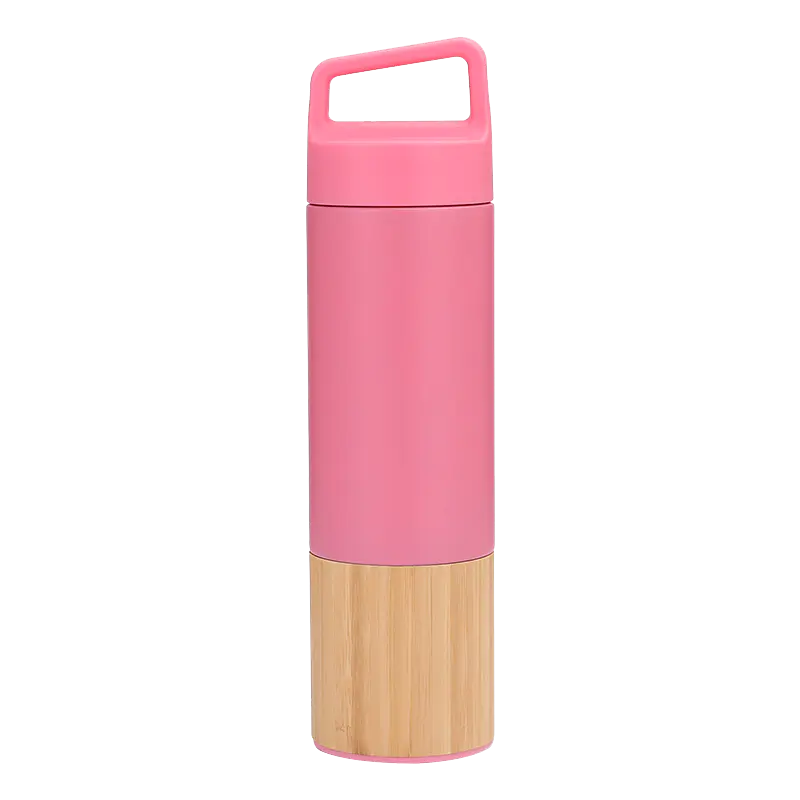
Bamboo lids, handles, and textured grips turn a simple bottle into a more comfortable companion. A well-shaped bamboo lid can be easier to open with cold hands, and a bamboo sleeve reduces the chance of slippage when carrying a packed bag. These tactile upgrades are subtle but meaningful in daily contexts: on trains, while hiking, in a cluttered office.
Portability and leak resistance remain central. Vacuum-sealed cores, gasketed caps, and thoughtful channeling in closures help prevent spills while bamboo accents reduce the heat transferred to those components. A range of closure styles exists — screw caps with bamboo tops, flip lids with bamboo accents, and straw-equipped lids that include bamboo elements — and each arrangement aims to balance thermal performance with convenience.
Heat and cold retention are driven by the inner architecture, but user experience in real life often depends on mouth opening, the ease of pouring, and whether a lid doubles as a cup. Bamboo elements contribute to those user interactions by softening edges and providing a warm feel where hands meet the object. Portability features such as integrated handles or slim profiles make the bottle more comfortable for different activities, whether daily commuting, walking in urban parks, or short outdoor outings.
| Feature area | What bamboo contributes | Why it matters |
|---|---|---|
| Lid and cap tactile | Warm, grippable surface | Easier handling with gloves or damp hands |
| Sleeve or grip | Slight cushioning and texture | Less slipping in a crowded bag |
| Visual finish | Natural grain and tone variance | Personalizes the bottle, resists visual monotony |
| Closure accents | Bamboo tops on technical seals | Combines usability with a natural look |
Selecting a durable option begins with attention to how materials meet. Examine seams and joints where the bamboo shell meets the thermal core: neat transitions, consistent adhesion, and a lack of excess glue suggest attentive assembly. The thickness and finish of the bamboo layer matter for handling; very thin veneers may dent, while thicker shells add weight but feel sturdier and age in a tactile way.
Pay attention to how the bamboo is treated. A lightly oiled finish protects the surface while keeping texture visible; heavy varnishes create a smooth exterior that may be easier to wipe but reduce tactile warmth. If the shell is sealed, understand what that implies about end-of-life options — sealed coatings can make composting or biodegradation more difficult.
The internal specifications matter as well. A stainless interior that is easy to access for cleaning, with wide mouths and removable gaskets, helps hygiene and maintenance. Look for thoughtful lid seals and components that can be disassembled for washing. Size and mouth opening affect use cases: narrower mouths are easier for sipping and keeping heat, while wider mouths are better for ice, infusers, and cleaning. Ergonomics — weight distribution and profile — influence whether a bottle feels natural in a bag or hand.
| Selection checklist | Why it matters |
|---|---|
| Clean seam lines between shell and core | Durability and long-term appearance |
| Oiled but breathable bamboo finish | Maintains texture and repairability |
| Wide mouth with removable seal | Easier cleaning and versatile use |
| Reasonable shell thickness | Longevity vs weight trade-off |
| Evidence of careful sourcing language | Ethical supply conversations without claims |
Daily cleaning is focused on the stainless interior: rinse after use, wash with gentle dish soap, and ensure the seal and cap receive attention because trapped residue can affect smell. Avoid abrasive pads on the steel interior to preserve any specialized finishes and to protect seals.
The bamboo exterior benefits from gentle handling. Avoid prolonged soaking and keep it away from dishwashers unless specified safe by the maker. Regular wiping with a soft cloth removes fingerprints and surface oils. For an occasional refresh, a light application of food-grade natural oil can revive the tone without introducing harmful residues. Wipe sparingly and polish with a soft cloth to restore subtle luster.
Drying and storage are simple but important: allow the bottle and its components to dry completely before reassembly and storage to reduce the potential for trapped moisture that could affect boundary materials. When traveling, pack the bottle so the bamboo shell is not pressed against sharp items that might dent or scratch the surface.
| Care action | Frequency | Why it helps |
|---|---|---|
| Wash interior with mild soap | After each use | Maintains hygiene and taste neutrality |
| Wipe bamboo with soft, dry cloth | Daily or as needed | Removes oils and prevents staining |
| Apply light food-safe oil | Occasionally | Revives tone and reduces dryness |
| Air-dry fully before storing | Every cleaning | Prevents moisture buildup and odors |
A Bamboo Thermos Flask can be a thoughtful present because it reads as personal without being intimate; it suggests an awareness of daily habits and an appreciation for objects that age gracefully. The natural look fits a range of interior styles — Scandinavian calm, modern rustic, bohemian texture, and pared-back corporate wellness programs that favor understated, reusable solutions. Customization possibilities help the gifting case: light engraving on a bamboo lid, burned-line patterns, or choice of grain finish make each option feel curated. Limited runs, artisan collaborations, and small-batch color accents allow gift-givers to find an item that resonates with a recipient's aesthetic sense. Design-conscious retailers and studio makers often spotlight such pieces in curated gift guides and seasonal selections. For workplaces exploring wellness initiatives, a bamboo-wrapped bottle can be part of a toolkit that nudges people toward reusable drinkware without overt branding. The tactile warmth and neutral look reduce the feeling of corporate kit and increase the chance the object will be used regularly rather than stashed.
A bamboo sleeve is often an aesthetic choice layered over a vacuum-insulated core that is responsible for temperature control. The technological heart — a sealed air-free cavity — holds temperatures steady, while the bamboo layer modulates surface feel and appearance. That combination lets users have sensory pleasure without forfeiting performance. bThe emotional value of such an object is significant: when a beloved item feels and looks good, it is more likely to be used and kept. That tendency encourages longer product life and reduces churn — a single object that remains present on desk and trail can displace several short-lived alternatives. Careful construction ensures that the attractive surface does not interfere with cleaning and maintenance, and that thermal seals are not compromised by the shell. Consumers drawn to the bamboo aesthetic seek objects that reward handling, and when the thermal core does its job, the item becomes a durable companion rather than a fleeting trend piece.
A quick way to weigh decisions is to consider typical priorities: thermal performance, weight, tactile feel, and end-of-life implications. Stainless-only bottles focus on performance and easy sanitization; glass cores emphasize purity of flavor but demand protective sleeves; plastic variants are lightweight and inexpensive but bring concerns about long-term durability and material origin. Bamboo-wrapped bottles sit between these poles: they combine stainless interiors with a plant-based exterior that improves user experience and signals sustainable intent.
| Option | Strength for everyday use | Trade-off to consider |
|---|---|---|
| Stainless body, no shell | Robust, easy to sanitize | Can feel cold or impersonal |
| Glass core with silicone sleeve | Pure flavor, visual clarity | Fragility and added protective sleeves |
| Plastic reusable bottle | Lightweight, inexpensive | Questions about origin and long-term durability |
| Stainless core with bamboo shell | Warm feel, craft appeal | Requires gentle exterior care and thoughtful sourcing |
Designers continue to explore subtlety: muted tones, limited hardware finishes, and handcrafted accents. The intersection of craft and industrial production has encouraged hybrid approaches where artisan techniques are combined with scalable vacuum technology. Retailers and makers are curating small runs and collaborations that emphasize provenance, and online platforms for independent creators have made it easier for design-minded buyers to find limited pieces that are not mass-market.
For a commuter, the warm grip of a bamboo sleeve makes a crowded commute a touch more pleasant; it reduces the chance of slipping and adds a visual cue that distinguishes a personal bottle from shared disposables. For short outdoor walks, the bottle's balance and handle options matter more than minute temperature curves; bamboo accents improve handling and comfort when pockets are scarce. In an office, the bottle reads as a conscious accessory that pairs with ceramics and wood desktops, encouraging reuse without drawing attention.
Many of the practical longevity measures are simple: keep seals replaceable, store lids dry, and refresh bamboo with a small amount of natural oil when the surface dries. Some makers offer replacement caps and gasket kits so that a well-loved core can be kept in service long after the shell shows cosmetic wear. If the bamboo layer is veneered rather than integral, small repairs such as light sanding and oiling can restore appearance; if the shell is a bonded composite, repairability depends on the original construction.
Encouraging long-term ownership also means resisting trend-driven replacement. A neutral palette and modest branding increase the odds that a bottle will remain relevant. When shopping, consider whether the maker provides spare parts or clear guidance for care — those signals indicate an object designed for use rather than rapid cycling.
Practical framing helps: consider where the bottle will be used most, whether wide-mouth access is important, and how heavy a shell you are comfortable carrying. Ask about seal replacements and cleaning instructions. If end-of-life concerns matter, request clarity about coatings and whether the bamboo is bonded in a way that prevents composting or recycling.
Beyond features, aesthetic fit and the act of using the object should also be factors. A bottle that feels pleasant to hold tends to be used more regularly, and this regular use is a meaningful sustainability outcome for any reusable vessel.
The moment you reach for your cup in the early morning, your fingertips touch not just the object, but a daily ritual redefined by the material itself. When the design of a Bamboo Thermos Flasks clear maintenance instructions and a replaceable sealing ring, it transforms from a functional container into an object worth keeping for a long time. The comfortable grip, the warm texture of the bamboo, and the soft click when the lid is opened all elevate this choice beyond mere practicality, making it an extension of one's lifestyle. Brands that pay attention to craftsmanship details make maintenance easy. As the years go by, the bamboo shell gradually develops a unique luster through repeated rubbing, and the areas that are frequently touched by fingers exude a deeper warmth, while the stainless steel inner liner continues to silently fulfill its function of keeping the temperature warm. It records the bumps of the commute, the contemplations at the office desk, the scenery outside the train window, and even the whispered conversations shared over the cup – these traces gently polished by time allow an otherwise ordinary object to gradually carry the imprint of personal life. While many fashionable items are discarded due to the changing times, Bamboo Thermos Flask continue to be used because of these naturally accumulated details—the vacuum layer still provides efficient insulation, and the sealing ring still makes that familiar soft sound, but the cup itself has become irreplaceable because of the owner's usage habits. Carrying it out means combining hydration needs with tactile pleasure, allowing performance and moderation to coexist, and letting the daily routine acquire a unique charm through the companionship of natural materials – it doesn't need external validation, only to be refilled daily, quietly standing by with its warm touch.
Your email address will not be published. Required fields are marked *
* Your email is safe with us, we don't spam.

Our company's products include vacuum flasks, beer mugs, coffee mugs, car tumbler, fire stove and tensile parts, etc.
Phone: +86-13566758039
Tel: +86-0579-87171178
Fax: +86-0579-87171178
E-mail: [email protected]
Add: No.29, Qiaodong Road, Qiaotouzhou Village, Longshan Town, Yongkang, Jinhua, Zhejiang, China.
Copyright © 2026 Yongkang Aijun Industry & Trade Co., Ltd.



 English
 中文简体
中文简体 日本語
日本語 Français
 Español