+86-13566758039


A food jar lid can feel reassuringly tight and still be inconvenient to use. It can also open easily when empty yet behave differently after the product has been filled and transported. For a buyer developing an insulated food-container range, those are separate questions. Treating them as one general “good lid” judgement makes sample feedback difficult to act on.
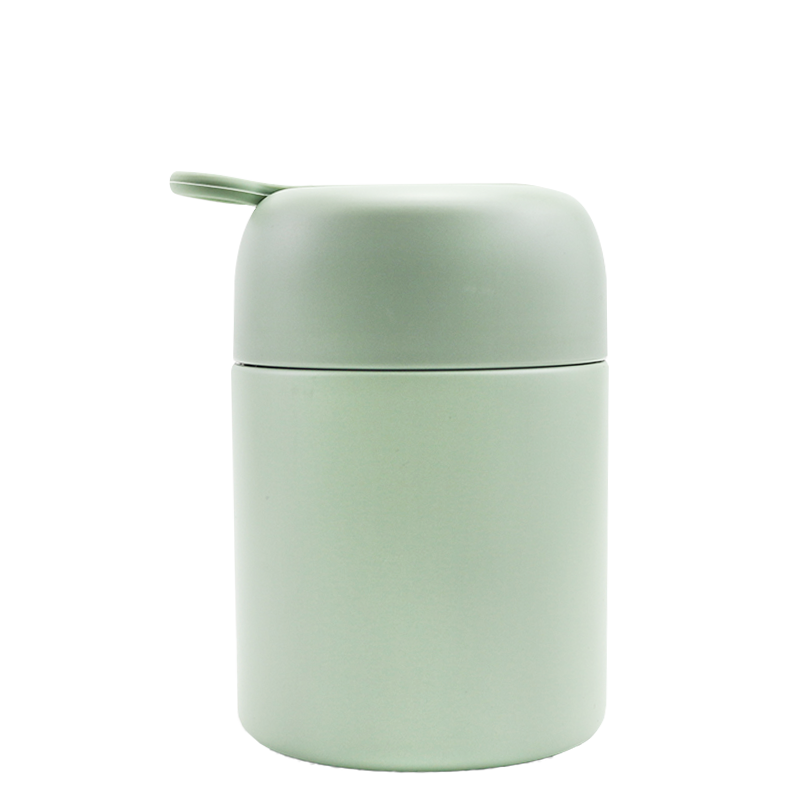
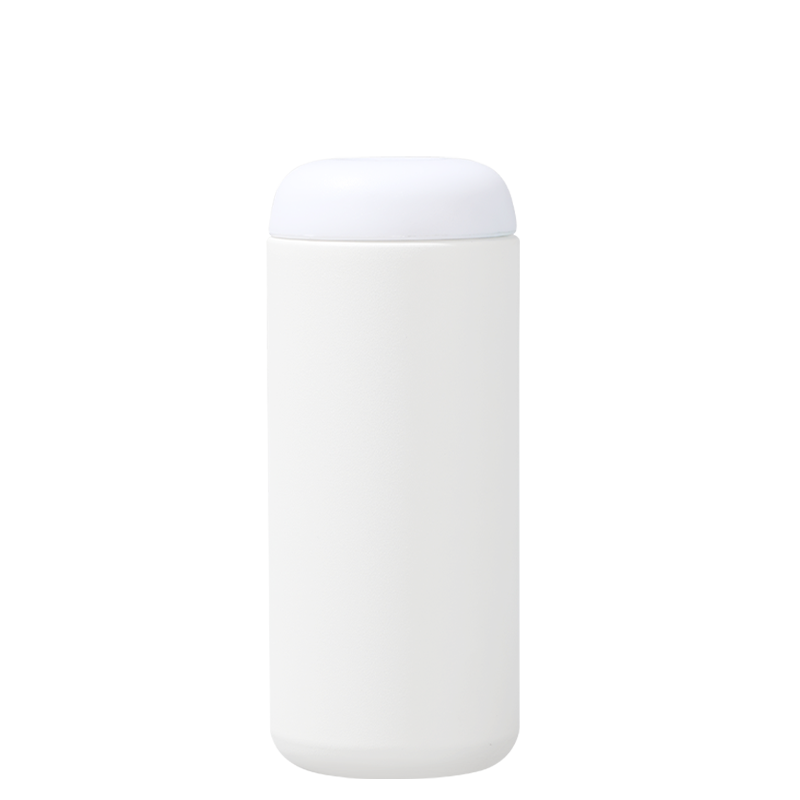
The portable vacuum insulated food jar shown in the Aijun range has a listed capacity of 500 ml. Its product information distinguishes the height with and without the lid and identifies a wide mouth. That gives the evaluation a concrete starting point: a compact jar whose closure must work with filling, transport, opening and cleaning, rather than a generic narrow-neck drinking bottle.
| Question | Useful observation | What the observation does not establish |
|---|---|---|
| Does the closed sample leak? | Outcome under an agreed filling and handling method | Performance under every journey or liquid condition |
| Can the intended user grip it? | Opening action and hand placement | A universal accessibility claim |
| Can it be cleaned as instructed? | Access to the mouth and identified removable parts | Dishwasher suitability unless specified |
Use that separation in the inspection form. A sample that passes a defined leakage exercise may still need a clearer grip surface or a better care explanation. Conversely, an easy-opening empty lid does not demonstrate leak resistance. Record each result in its own field instead of combining them into a single approval tick.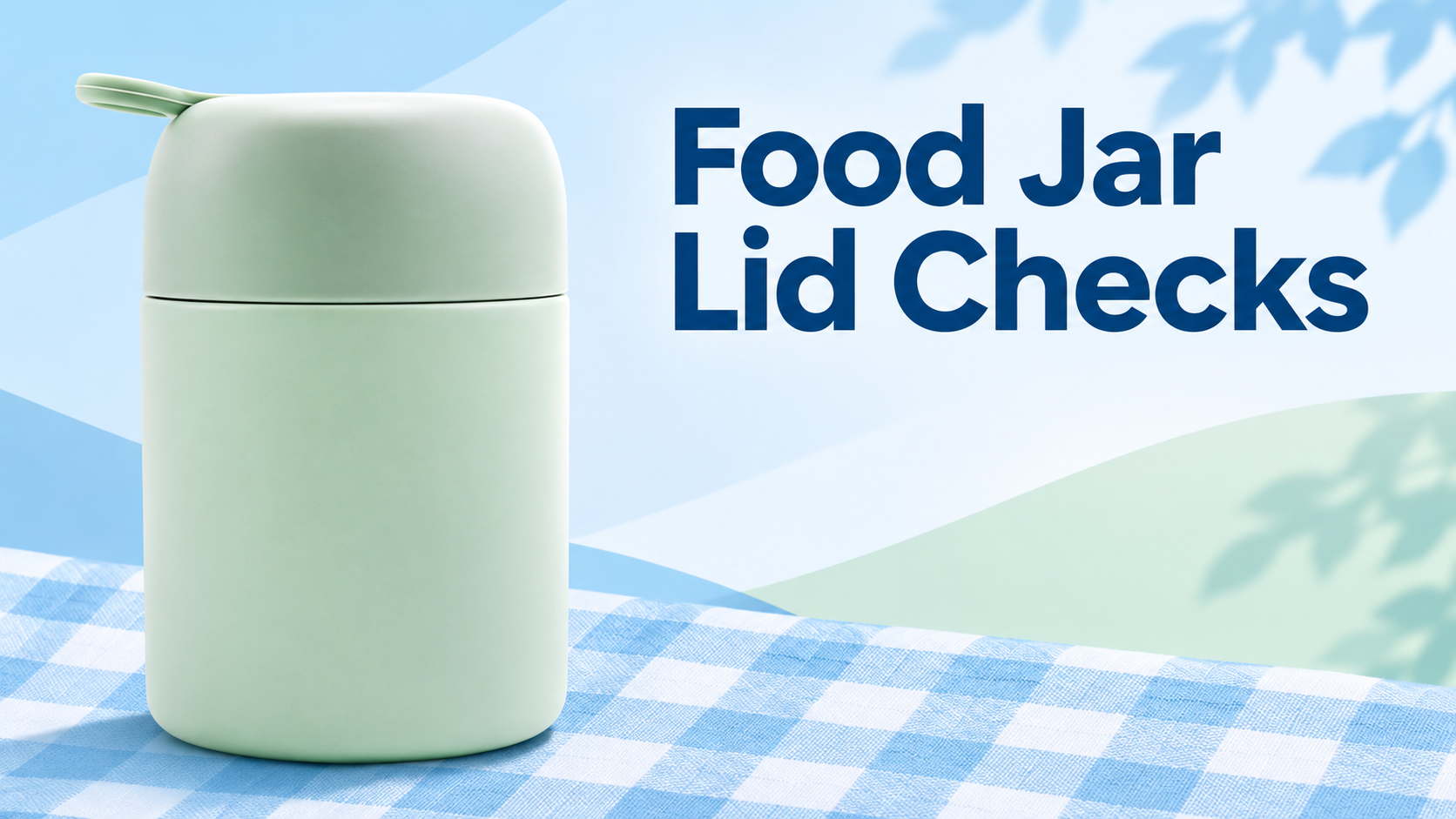
Begin by identifying the exact jar and closure version. Inspect the visible sealing area before filling. Food residue, an incorrectly seated removable seal or a cross-threaded lid can alter an observation. Any removable component should be handled only as allowed by the manufacturer's instructions; the review is not an invitation to pry apart a closure.
For an initial handling exercise, agree a suitable nonhazardous test medium and filling level with the supplier. Do not improvise a hot-liquid inversion demonstration. A jar can retain heat, and hot contents can cause injury if the closure is opened or handled incorrectly. Product instructions and the agreed test method should define safe use conditions.
Carry out the agreed movement sequence, then inspect the closure exterior and contact surfaces. Identify where moisture appeared rather than reporting only “failed.” Distinguish liquid from residual water left on the outside during filling. Photographs showing the sealing area and the closed orientation can help the supplier understand what actually happened.
Opening a jar often involves holding the body in one hand while turning the lid with the other. Review that action with dry hands under the intended demonstration conditions. Check whether decoration, labels or a sleeve obstruct the normal grip. The finished retail version may behave differently from a bare undecorated sample.
Ask evaluators to describe the difficulty rather than tightening the lid harder to compensate for an uncertain result. Was the body hard to hold? Was the direction of opening unclear? Did a decorative feature interfere with the hand? These details lead to different development responses. They should not be converted into a claimed opening-torque requirement without a defined measurement method.
The portable vacuum insulated food jar provides a useful reference for keeping the review tied to a particular closure and body. Use the approved sample photographs in discussions. A spare lid from a different jar, even one that looks similar, should not be treated as an interchangeable comparison component.
Look at the actual route a user takes to remove leftover food and rinse the jar. A wide opening helps provide access, but the lid may contain smaller areas that require separate attention. The care guide should identify the allowed cleaning method and the parts that may be removed, if any.
Drying also belongs in the discussion. A closed jar assembled while wet can leave moisture where users cannot easily see it. Follow the supplier's care guidance and show the intended storage condition. Do not promise that a closure prevents odours or bacterial growth without appropriate evidence for the finished product and its stated use.
Consider the information printed on a replacement-part request as well. A lid photograph taken from above may show colour and decoration but hide the sealing geometry. Retain an underside reference and the approved part identity in the service file. If a seal is supplied separately, confirm its installation orientation and care instructions with the manufacturer. A customer-service team can then distinguish a missing component from a different closure version. This prevents an apparently simple spare-lid enquiry from becoming an unverified interchangeability claim across the entire food-container range.
Approve the jar version, closure arrangement, decoration and care instructions together. If a sample needs a design change, record what must change and which observations must be repeated. A different gasket or lid geometry may affect several aspects of use, so approval should not be transferred automatically from the earlier version.
This approach produces a more useful launch decision than simply asking whether the lid feels premium. Leakage, grip and cleaning access each matter, but they matter in different ways. Evaluating them separately makes a food jar easier to specify, easier to explain and easier to support after it reaches the customer.
Your email address will not be published. Required fields are marked *
* Your email is safe with us, we don't spam.

Our company's products include vacuum flasks, beer mugs, coffee mugs, car tumbler, fire stove and tensile parts, etc.
Phone: +86-13566758039
Tel: +86-0579-87171178
Fax: +86-0579-87171178
E-mail: [email protected]
Add: No.29, Qiaodong Road, Qiaotouzhou Village, Longshan Town, Yongkang, Jinhua, Zhejiang, China.
Copyright © 2026 Yongkang Aijun Industry & Trade Co., Ltd.


 English
 中文简体
 日本語
 Français
 Español