+86-13566758039


A vacuum insulated bottle is often carried without much thought during the day. It moves between home, work, travel, and short breaks, getting opened and closed many times. Because of this repeated use, the inside condition does not stay exactly the same even if the outside still looks clean.
At the beginning, maintenance feels simple. Water or light drinks do not leave obvious marks, and rinsing seems enough. After a while, small changes start to appear. A faint smell, a slight layer on the inner wall, or moisture staying around the lid area can slowly build up.
What often gets overlooked is how small habits shape long term condition. If the bottle is rinsed soon after use, it tends to stay easier to clean. If it is left closed for long periods, residue has more time to settle in hidden areas that are not easy to see.
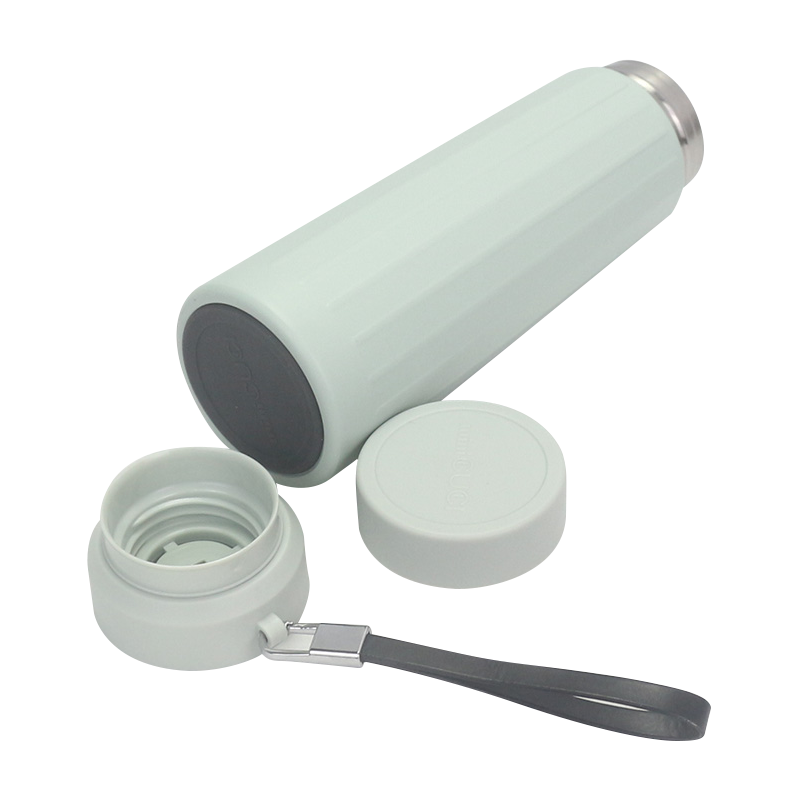
Many vacuum insulated bottles are built with a double layer structure. The inner layer directly holds the liquid, while the outer layer helps reduce heat exchange. Between them is a sealed space that supports temperature stability during use.
The inner surface may look smooth, but different liquids behave differently once inside. Some flow out cleanly, while others leave thin traces, especially near the bottom where liquid movement is slower.
The lid is usually more detailed than it appears. Inside, there are sealing parts and small channels that guide liquid flow. These spaces are often not cleaned as carefully as the main body, even though they come into contact with every use.
Common areas that usually need attention:
Each part reacts differently depending on what is stored, so cleaning does not always look the same for every section.
Residue inside the bottle depends mostly on what has been poured in and how long it stays inside. Some liquids leave almost nothing behind, while others slowly create visible layers.
Plain water usually leaves very light traces. Tea or coffee may leave a slight color change on the inner wall. Sweet drinks can form a sticky layer over time.
These differences can be seen in a simple way:
| Beverage Type | Residue Behavior | Cleaning Effort |
|---|---|---|
| Plain Water | Very light trace | Simple rinse is enough |
| Tea Based Drinks | Mild surface staining | Light cleaning needed |
| Coffee Based Drinks | Stronger attachment | Needs deeper cleaning |
| Sweetened Drinks | Sticky layer buildup | Requires full wash |
Over time, these patterns decide how often deeper cleaning becomes necessary.
Cleaning the bottle does not always need a long process. In many cases, simple steps done after each use are enough to keep it in stable condition.
When stronger drinks are involved, cleaning soon after use becomes more important. Waiting too long allows residue to settle, which makes later cleaning less smooth.
A simple routine often looks like this:
These small actions, when repeated regularly, help reduce buildup without extra effort.
At times, rinsing is not enough to handle residue that has already built up. In those cases, a deeper cleaning method is needed.
Warm water soaking is often used to soften residue inside the bottle. After some time, the inner surface becomes easier to clean without strong force.
A soft brush can then be used to reach curved areas and the bottom section, where residue tends to stay longer.
A common cleaning flow:
The key is to avoid rough tools that may affect the inner surface over time.
The lid is usually the part that people overlook first, yet it is also where residue tends to stay the longest. Unlike the bottle body, it contains small channels, narrow gaps, and sealing areas that can hold moisture after every use. When these spaces are not cleaned properly, a light smell or sticky feel may slowly appear.
If the lid can be taken apart, cleaning becomes more complete. Each section can be handled on its own instead of trying to wash everything at once. This makes it easier to reach areas that are normally hidden during quick rinsing.
A simple way to approach lid cleaning:
Common Lid Care Focus
| Component | Cleaning Focus | Common Issue |
|---|---|---|
| Sealing Ring | Removing trapped residue | Odor staying in rubber area |
| Flow Channel | Rinsing water path | Slow blockage or buildup |
| Inner Lid Surface | Wiping and washing | Light staining over time |
When these parts are cleaned regularly, the lid tends to stay closer to a neutral condition during daily use.
Odor inside a bottle does not usually appear suddenly. It often builds slowly from small residue left behind after repeated use. When the bottle stays closed for long periods with a bit of moisture inside, that environment makes smell more noticeable over time.
One of the simplest ways to reduce this is allowing air to move through the bottle after cleaning. Leaving it open for a while helps moisture escape instead of staying trapped inside.
In everyday use, a few habits make a noticeable difference:
Odor control is less about strong cleaning methods and more about keeping small routines consistent.
The inner part of a vacuum insulated bottle is built to handle regular contact with different liquids, but it still changes slightly over time. Some drinks leave faint marks, especially when they stay inside longer than usual. These changes are usually gradual and depend on usage habits rather than sudden events.
The outer surface also goes through daily contact with bags, tables, or other items. Small scratches or marks can appear when it is stored together with harder objects during travel or work.
Cleaning approach should always match the surface type. The inside needs gentle tools to avoid affecting its smooth layer, while the outside only requires simple wiping in many cases.
Over time, how the bottle looks and feels is often shaped more by handling habits than by the material itself.
Cleaning tools do not need to be complicated. In many cases, simple and soft materials are enough to keep the bottle in good condition.
Common safe choices include:
These tools are usually sufficient for both daily and deeper cleaning needs.
At the same time, some items are better avoided because they may affect the inner surface over time:
Using gentle tools helps keep the inner surface smoother for longer use.
After washing, drying is often treated as a small step, but it has a strong influence on long term condition.
Allowing air to flow inside the bottle is usually the simplest method. Placing the bottle upside down or leaving it open helps moisture leave naturally instead of staying trapped.
In daily practice, storage habits often include:
These habits are simple, but they help maintain a more stable internal condition over time.
Not all drinks behave the same inside a bottle. Some leave almost no visible trace, while others slowly form layers that are harder to remove.
Water is usually the easiest to handle, often requiring only a quick rinse. Tea and coffee may leave light color changes or stains after repeated use. Sweet drinks can leave a slightly sticky layer that takes more effort to clean.
Because of this, cleaning habits often adjust naturally depending on what is stored rather than following a fixed routine every time.
Keeping a vacuum insulated bottle in good condition is less about complex cleaning steps and more about steady, repeated habits. Small actions done regularly often have a greater effect than occasional deep cleaning.
In practical product development and daily use environments, companies such as Yongkang Aijun Industry & Trade Co., Ltd. are often connected with the ongoing focus on simple usability and real-life maintenance needs, reflecting how everyday handling and product structure work together in practical situations.
Your email address will not be published. Required fields are marked *
* Your email is safe with us, we don't spam.

Our company's products include vacuum flasks, beer mugs, coffee mugs, car tumbler, fire stove and tensile parts, etc.
Phone: +86-13566758039
Tel: +86-0579-87171178
Fax: +86-0579-87171178
E-mail: [email protected]
Add: No.29, Qiaodong Road, Qiaotouzhou Village, Longshan Town, Yongkang, Jinhua, Zhejiang, China.
Copyright © 2026 Yongkang Aijun Industry & Trade Co., Ltd.



 English
 中文简体
中文简体 日本語
日本語 Français
 Español