+86-13566758039


A replacement seal can look simple while being difficult to identify from a customer photograph. Similar rings may belong to different lid designs, and a flask that retains its familiar outer appearance can receive a revised closure. Buyers planning after-sales stock should therefore specify vacuum flask spare seals by the actual lid assembly rather than by bottle capacity alone.
The first purchasing question is whether a seal is intended to be removed and replaced by the user. Obtain that answer from the manufacturer for the selected product. A service plan should follow the approved lid design, cleaning instructions and parts supply arrangement; it should not encourage customers to dismantle components that were never intended for routine removal.
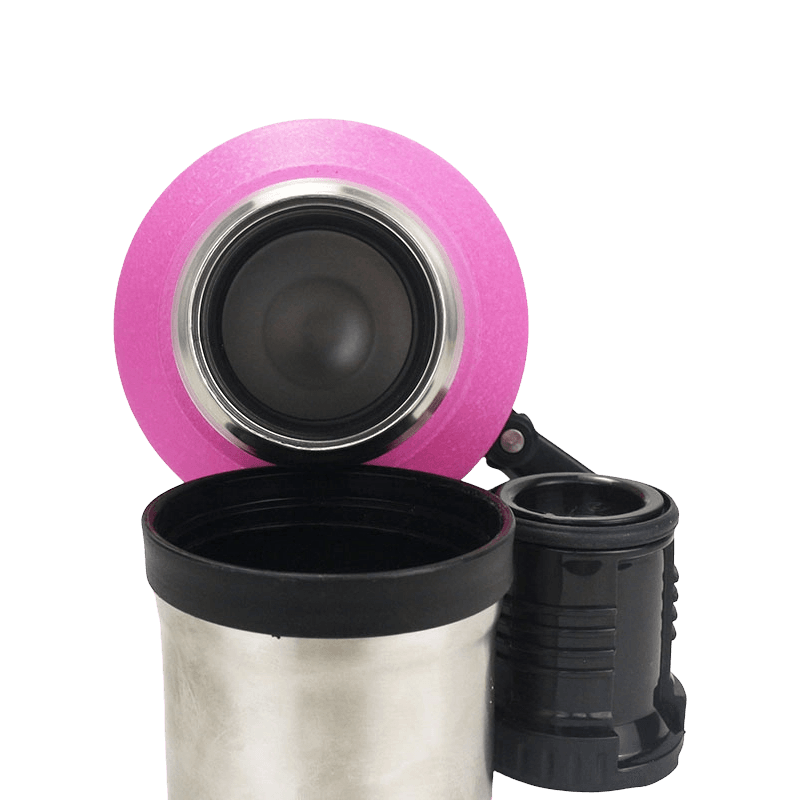
Record the flask model, lid reference and current revision. Keep photographs of the assembled product and any manufacturer-approved removable components. When reviewing the vacuum thermos range, remember that category membership does not establish that products share a closure or replacement part.
A flask lid version should remain identifiable in purchase records even when the bottle colour or decoration changes. Ask the supplier how revisions are controlled and whether the same commercial product name has ever covered more than one lid. If so, request a practical method for distinguishing them before ordering spare seals.
Confirm the service scope. The manufacturer may recommend a complete lid assembly, a particular removable gasket or a different replacement route for a given complaint. Do not assume that every leak or closure problem can be resolved by changing a ring. Damage, incorrect assembly or another component may require separate assessment.
A replacement gasket profile includes more than an approximate outer diameter. Ask for the supplier's controlled part drawing or identification sheet covering the dimensions and shape that matter to the actual groove. A flat ring, shaped lip and stepped section should not be treated as interchangeable because they appear similar in an overhead image.
Use the supplier's part reference in the enquiry. Photographs help communication but may conceal thickness, seating direction or small features. If a sample is used for matching, state its source and condition, because a used part may no longer represent the original shape reliably.
Ask the manufacturer to confirm the material specification and applicable food-contact documentation for the proposed replacement. A colour match does not establish material equivalence. Any regulatory statement must apply to the actual component and intended market; do not turn a general material description into an unsupported certification claim.
Evaluate the replacement with the actual intended lid and flask. Agree the supplier's assembly method and suitable checks for seating, closure and leakage. Define test conditions in advance, including the liquid, temperature and handling conditions relevant to the product's instructions. Avoid improvising hazardous hot-liquid checks during an informal sample review.
Keep the test result tied to the parts and conditions used. An approved replacement for one lid is not evidence of compatibility with every bottle in the range. Equally, a seal replacement should not automatically be marketed as restoring a particular heat-retention duration without appropriate assembly-level evidence.
| Service-stock item | Information to retain | Question it resolves |
|---|---|---|
| Flask identity | Model and relevant production revision | Which product is being serviced? |
| Lid identity | Assembly reference and recognition images | Which closure is fitted? |
| Seal identity | Part code and profile drawing | Which replacement is approved? |
| Material record | Specification and relevant documentation | What component is being supplied? |
| Assembly guidance | Removal, orientation and fitting instructions | How should the part be handled? |
| Verification record | Defined checks on the approved combination | What compatibility was evaluated? |
This record can remain concise. Its value comes from linking the information rather than storing an unlabelled bag of rings beside a bottle sample.
Ask for clear images showing the permitted removal and refitting sequence. Indicate the seating position and orientation where relevant. Keep any tools, cleaning methods or handling limitations consistent with the manufacturer's instructions. Do not recommend sharp objects or aggressive cleaning simply because they appear convenient.
Explain how users can check that a removable seal is seated before normal use, using the supplier's approved guidance. The instruction should also identify when to stop using a damaged component and contact the seller. Avoid suggesting that extra tightening or adding an unrelated seal is an acceptable repair.
Keep the care guidance specific to the approved material and closure. A washing method suitable for a flask body may differ from one appropriate for the complete lid. Obtain the actual component instructions instead of copying a generic dishwasher or sterilization statement across the range.
Label each pack with the part reference and compatible lid version. If several similar seals are ordered, separate them physically and make the label readable without opening every pack. State the quantity per pack so the service team can reconcile stock against the packing list.
Request storage guidance from the supplier and retain batch information where provided. Do not invent a shelf-life or reorder interval. The appropriate stock level depends on the sales population, available service data, replenishment time and the manufacturer's actual supply arrangement.
If a component is revised, agree how existing stock will be identified and handled. The service team should know whether older seals remain compatible, require separate assignment or must no longer be supplied. A new part number alone is not enough if warehouse labels and customer support records still show the earlier reference.
Send the lid photographs and known product records with the enquiry. A controlled specification for vacuum flask spare seals gives the supplier a clear matching task and gives the distributor a safer, more practical basis for after-sales support than a capacity label or a close visual guess.
Your email address will not be published. Required fields are marked *
* Your email is safe with us, we don't spam.

Our company's products include vacuum flasks, beer mugs, coffee mugs, car tumbler, fire stove and tensile parts, etc.
Phone: +86-13566758039
Tel: +86-0579-87171178
Fax: +86-0579-87171178
E-mail: [email protected]
Add: No.29, Qiaodong Road, Qiaotouzhou Village, Longshan Town, Yongkang, Jinhua, Zhejiang, China.
Copyright © 2026 Yongkang Aijun Industry & Trade Co., Ltd.


 English
 中文简体
 日本語
 Français
 Español