+86-13566758039


Drinkware is among frequently used items in daily life. For a long time, the market has been dominated by products made from materials such as glass, plastic, and stainless steel. Stainless steel, in particular, has held a significant position in the markets for vacuum-insulated flasks and outdoor water bottles, thanks to its strength, corrosion resistance, and mature manufacturing technology.
However, interest in titanium drinkware has risen markedly in recent years. Titanium cups have increasingly become highly recognizable products, particularly within consumption contexts such as camping, hiking, mountaineering, travel, and coffee culture.
From a market evolution perspective, the titanium cup is not a product that appeared out of nowhere. Early titanium cups were primarily used in outdoor sports and professional gear, catering mainly to mountaineering, hiking, and camping enthusiasts. As outdoor activities have become more mainstream—and as consumer demand for lightweight, high-quality, and personalized products has grown—titanium cups have transcended their original niche to enter broader daily life scenarios.
Consequently, the recent popularity of titanium cups is not the result of a single factor, but rather the combined outcome of material advantages, consumption upgrades, the growth of outdoor culture, and market communication.
Titanium is a metal characterized by high strength, low density, and strong corrosion resistance. In the realm of drinkware manufacturing, these properties provide the foundation for products that are both lightweight and durable.
First, titanium has a lower density than stainless steel; thus, with a well-designed structure, the final product can be significantly lighter. For consumers involved in activities like hiking, mountaineering, and long-distance travel—where carrying substantial gear is necessary—reducing equipment weight offers significant practical value.
Second, titanium exhibits strong corrosion resistance. Under normal usage conditions, a stable oxide film forms on its surface, enhancing the material's ability to withstand various corrosive environments. This gives titanium cups a distinct advantage in outdoor settings and scenarios involving long-term use.
Furthermore, titanium possesses good high-temperature resistance, making it suitable for outdoor drinkware that comes into contact with hot liquids or is used directly for heating.
It should be noted, however, that material properties alone do not mean titanium cups are better to those made from other materials in every respect. A product's ultimate performance is also influenced by factors such as the specific grade of titanium used, the cup's structural design, manufacturing techniques, welding processes, and surface treatments. Therefore, when evaluating titanium cups, one must consider both the material and the manufacturing process, rather than relying solely on the label "titanium" as the criterion for judgment.
One of the key reasons titanium cups initially gained attention is the expansion of the outdoor sports market.
Outdoor activities such as hiking, mountaineering, and camping typically require consumers to carry a significant amount of gear, including tents, sleeping bags, stoves, water bottles, tableware, and other essentials. In such scenarios, the weight of the equipment directly impacts the carrying experience.
Titanium cups are lightweight, making them highly compatible with the trend toward lightweight outdoor gear.
Consumers are particularly sensitive to gear weight during long-distance hikes and mountaineering expeditions. Rather than simply seeking the more affordable price, some outdoor enthusiasts are willing to pay a premium for features like light weight, durability, and portability.
As camping has evolved from a niche outdoor activity into a mainstream leisure pursuit, titanium cups—originally designed for serious outdoor enthusiasts—have gained access to a much larger potential consumer base.
Consequently, the growth of outdoor sports has not only expanded the usage scenarios for titanium cups but also laid a important foundation for their entry into the mass market.
Another major reason for the rising interest in titanium cups is the changing nature of consumer demand for drinkware.
Traditionally, the purchase of drinkware focused on basic functional attributes such as capacity, price, seal integrity, and thermal insulation. However, as living standards rise, consumer priorities are shifting from mere functionality to the overall user experience.
This shift is evident in three key areas.
First, consumers place greater importance on material quality. Compared to standard plastic cups, metal drinkware generally offers greater structural stability; titanium, in particular, satisfies the demand among some consumers for premium materials and enhanced durability.
Second, consumers attach greater importance to product design. A cup is no longer viewed merely as a vessel; its appearance, tactile feel, weight, and portability all influence purchasing decisions.
Third, consumers are increasingly focused on long-term value. The culture of disposable consumption is gradually giving way to a preference for reusable, durable, and sustainable products. With their long service life, titanium cups align well with this evolving consumer trend. It is evident that the consumer value of titanium cups is no longer derived solely from their basic functionality; instead, it has expanded to encompass multiple dimensions, including materials, design, user experience, and lifestyle.
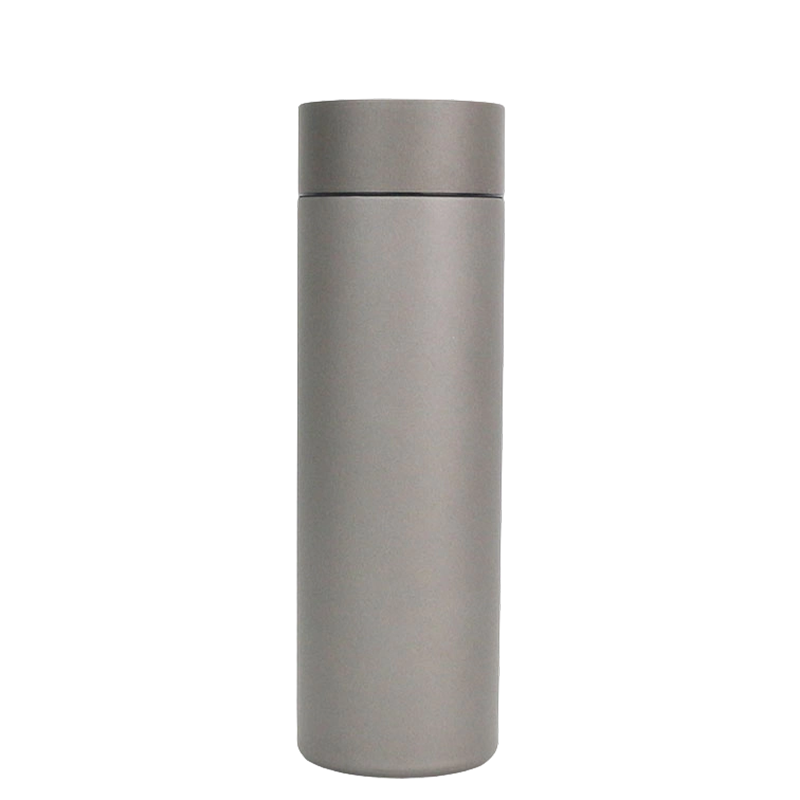
Beyond the material itself, product design is a key factor driving the popularity of titanium cups.
Traditional titanium cup designs were typically simple, emphasizing lightweight construction and outdoor utility. However, as the market has expanded, designs have become increasingly diverse.
For instance, various surface treatments—such as sandblasting, brushing, and polishing—can create distinct visual effects. Some products also utilize laser engraving, unique textures, and color finishes to enhance brand recognition and product distinctiveness.
At the same time, lid designs have evolved significantly. Moving beyond simple traditional lids, options now include sealed lids, straw lids, coffee lids, and designs featuring tea-water separation, allowing titanium cups to suit a wider range of usage scenarios.
Consequently, competition in the modern titanium cup market has shifted from a contest of materials alone to a comprehensive rivalry involving materials, structural design, manufacturing craftsmanship, and aesthetics.
The rise of social media has been another important factor in the growing attention paid to titanium cups in recent years.
In the past, consumers primarily learned about titanium products through physical stores, specialized outdoor retailers, and traditional advertising. Today, however, social media platforms like Xiaohongshu, Instagram, and TikTok enable the rapid dissemination of product information.
Titanium cups possess strong visual appeal. Their metallic texture and minimalist design—combined with settings like camping, coffee culture, and travel—make it easy to create highly recognizable and engaging content.
For example, a titanium cup placed next to a camping table, a hiking backpack, or coffee brewing equipment easily evokes lifestyle concepts associated with the outdoors, nature, and minimalism.
Thus, social media has, to some extent, transformed consumer perceptions of titanium cups.
While titanium cups were once viewed primarily as "specialized outdoor gear," some consumers now increasingly perceive them as "high-quality lifestyle products."
This shift in consumer perception holds significant importance for the future growth of the titanium cup market.
In terms of usage scenarios, titanium cups are undergoing significant market expansion.
Initially, titanium cups were primarily used in specialized outdoor settings, such as:
Hiking, mountaineering, camping, and wilderness survival. As the consumer base expands, the usage scenarios for titanium cups are diversifying:
Including coffee, tea, office use, travel, home use, and the gift market.
This shift indicates that titanium cups are evolving from single-function products into lifestyle items suitable for various settings.
In particular, the growth of coffee culture and outdoor lifestyles has forged a closer link between titanium cups and everyday consumption.
Consumer motivation for purchasing titanium cups is also shifting from "outdoor utility" to an appreciation for the material and design itself.
This is a key reason why titanium cups have moved from a niche market into the mainstream.
Although titanium cups have garnered significant attention in recent years, their market development still faces certain limitations.
First, the cost of titanium material is generally higher than that of standard stainless steel, resulting in higher retail prices. This higher price point may deter some mass-market consumers from purchasing.
Second, processing titanium requires specific technical expertise and equipment. Manufacturers must implement precise process controls across various stages, from material forming to welding and surface finishing.
Third, there is significant variation in quality among titanium cup products on the market. Factors such as material grade, purity, cup structure, and manufacturing methods all influence the final product's performance. Consequently, as the market grows, industry standards and consumer awareness need to be further developed.
Finally, titanium cups currently occupy a relatively niche segment of the drinkware market; the scale of consumption remains small compared to the mature stainless steel cup market.
Therefore, the future expansion of the titanium cup market will depend on a combination of factors, including product innovation, cost control, consumer education, and brand building.
Based on current consumer demand, titanium cups are likely to evolve in the following directions:
1. Greater Product Functional Diversity
In the future, titanium cups may expand beyond simple drinking vessels into a wider range of products, such as coffee cups, tea cups, vacuum-insulated flasks, water bottles, and outdoor dining gear.
2. More Personalized Product Designs
As young consumers become a key demographic, elements such as unique colors, textures, laser engraving, and personalized customization are likely to see wider application.
3. Further Expansion of Usage Scenarios
Titanium cups will no longer be confined to the outdoor market but are likely to see increased adoption in office, travel, home, coffee, and gift-giving contexts. 4. Coexistence of High-End and Mass-Market Offerings
Some products will continue to emphasize high-end pure titanium materials, precision craftsmanship, and design value; meanwhile, as production processes mature, titanium cups that prioritize cost-effectiveness may also emerge.
5. Rising Demand for OEM and Customization
For brands and retailers, titanium cups offer significant potential for product differentiation. Consequently, customization options—such as logos, colors, packaging, and structural designs—are likely to become key areas of development in the B2B market.
In summary, the recent attention garnered by titanium cups is no coincidence; it is the result of a convergence of factors, including material properties, the growth of outdoor activities, consumption upgrades, product design, and the influence of social media.
Regarding product attributes, the lightweight, corrosion-resistant, and heat-resistant nature of titanium makes these cups highly valuable for outdoor use. In terms of consumer trends, the growing focus on materials, design, and user experience has paved the way for titanium cups to enter the mass market. From a marketing perspective, social media has further amplified the visual appeal and lifestyle connotations associated with titanium cups.
Therefore, the popularity of titanium cups should not be viewed merely as a short-lived consumer trend. More accurately, it reflects a shift in modern consumer demands regarding drinkware—moving from a simple pursuit of basic functionality to a greater emphasis on materials, weight, design, durability, and the overall user experience.
Looking ahead, as outdoor lifestyles evolve and titanium processing technologies mature, the application scenarios for titanium cups are expected to expand further. However, companies must also focus on product quality, manufacturing processes, cost control, and differentiated design to establish long-term competitiveness in this growing market.
From this perspective, the true market value of titanium cups lies not merely in the titanium material itself, but in the synergy created between the material and modern consumer needs, product design, and lifestyle choices.
Your email address will not be published. Required fields are marked *
* Your email is safe with us, we don't spam.

Our company's products include vacuum flasks, beer mugs, coffee mugs, car tumbler, fire stove and tensile parts, etc.
Phone: +86-13566758039
Tel: +86-0579-87171178
Fax: +86-0579-87171178
E-mail: [email protected]
Add: No.29, Qiaodong Road, Qiaotouzhou Village, Longshan Town, Yongkang, Jinhua, Zhejiang, China.
Copyright © 2026 Yongkang Aijun Industry & Trade Co., Ltd.



 English
 中文简体
中文简体 日本語
日本語 Français
 Español