+86-13566758039


The appearance of a metal drinking cup is closely related to what happens on its surface. A smooth wall, a fine texture, or a colored finish can change the way light moves across the material. For titanium drinkware, surface treatment has become an important part of appearance design because the material can show different visual effects without changing the basic shape of the cup.
Oxidation and crystal-style finishes are two approaches that can change how the surface looks under different lighting conditions. They can affect color, reflection, texture, and the way small surface details are noticed. The result depends not only on the finishing process itself, but also on the condition of the metal before treatment.
Oxidation can create a visible surface layer that changes how titanium interacts with light. Instead of leaving the metal with a plain metallic appearance, controlled oxidation can produce different shades and reflections across the surface.
The visual change is related to the condition of the surface layer. When light reaches the treated area, part of it is reflected while other light interacts with the surface before reaching the viewer. Small changes in the surface condition can therefore influence the color that is seen from a particular angle.
The appearance is not always fixed from every direction. A surface may look different when viewed straight on compared with a slight side angle. Indoor lighting, daylight, and nearby objects can also affect the way the color appears.
For production, consistency starts before oxidation takes place. Residue from handling, uneven polishing, or small surface defects can interfere with the visual result. Cleaning and surface preparation therefore become closely connected with appearance control.
A practical production sequence often considers:
Oxidation can also interact with the original surface texture. A smooth metal surface may reflect light in a different way from a brushed or finely textured surface, even when the same treatment is applied.
For that reason, oxidation should not be considered separately from the preparation work that comes before it. The final color is only one part of the appearance. Reflection, texture, cleanliness, and surface uniformity also influence what the viewer sees.
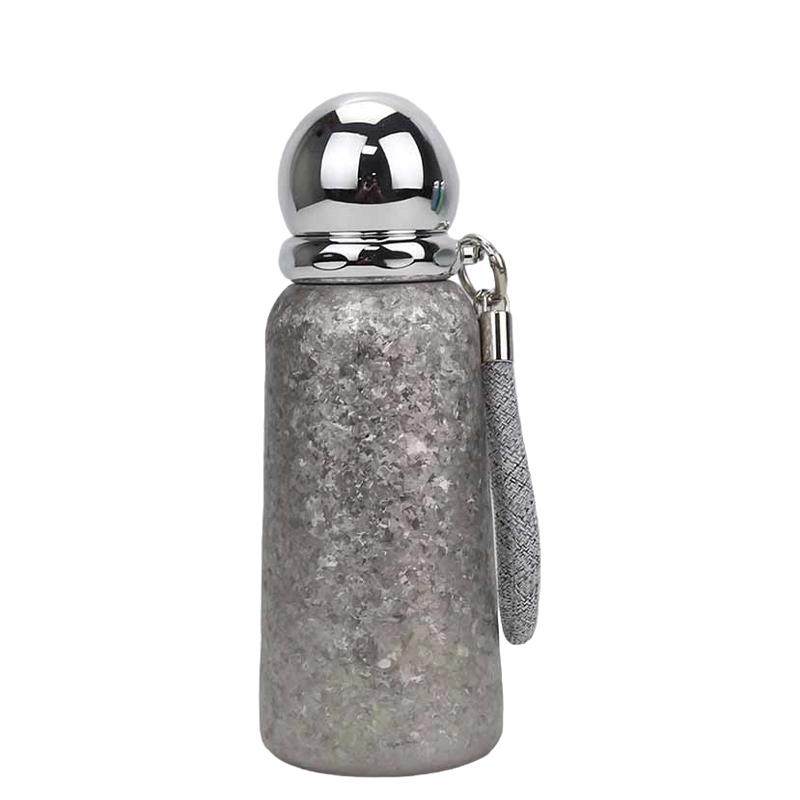
A crystal-style finish gives the surface a different visual character by introducing fine variations in how light is reflected. Rather than presenting one continuous, uniform reflection, the surface can contain subtle changes that create a layered appearance.
The term "crystal finish" is often used to describe a visual effect rather than a single fixed surface condition. Its appearance may vary according to the underlying texture, the treatment method, and the direction of light.
Fine surface variations can make certain areas appear brighter while nearby sections look softer. When the cup moves, these differences may shift across the surface. The result is a changing visual effect without requiring a complex external pattern.
The relationship between texture and light can be considered in several ways:
| Surface Character | Light Response | Visual Effect |
|---|---|---|
| Smooth surface | More continuous reflection | Cleaner and more even appearance |
| Fine texture | Light spreads across small surface variations | Soft changes in brightness |
| Irregular texture | Reflection changes across different areas | More visible surface variation |
| Combined finish | Different reflection patterns interact | Layered visual appearance |
A crystal-style effect also depends on how evenly the surface has been prepared. Large differences in texture can interrupt the intended appearance. Small variations may contribute to the visual character, while unwanted marks can make the surface look inconsistent.
The treatment therefore needs to balance texture with the natural appearance of the metal. Too little surface variation may produce a flat visual effect, while uncontrolled variation can make the finish appear uneven.
For drinkware production, the relationship between appearance and handling is also worth considering. A textured surface may feel different from a smooth surface when held. Cleaning habits can also influence how the finish looks over time, particularly when residue collects in fine surface areas.
Oxidation and crystal-style finishing can influence different aspects of the same surface. Oxidation mainly changes the visual color and reflection characteristics, while surface texture affects how light moves across the treated area. When combined carefully, the two effects can create more visual depth.
Color alone may appear relatively uniform across a curved cup wall. A fine surface texture can introduce changes in brightness, making the color appear to shift as the viewing angle changes. The opposite can also occur: a textured surface without a controlled color treatment may show texture clearly but have less variation in overall tone.
Their interaction can be considered through three basic elements:
The curved shape of a cup makes this relationship more noticeable. Light does not reach every part of a rounded wall in the same way. As the surface moves away from the direct light source, its brightness changes. Fine texture can make those transitions more visible.
At the same time, the treatment needs to remain compatible with the intended use of the cup. A finish designed around appearance alone may not account for cleaning, handling, or contact with surrounding objects. Surface selection therefore involves more than choosing a color or pattern.
The connection between oxidation and texture also leads back to production preparation. A carefully treated surface cannot fully hide an uneven foundation. When the base condition, cleaning process, oxidation, and texture treatment are considered as connected steps, the resulting appearance is easier to control from one production stage to the next.
That relationship becomes even more important when different lighting conditions are considered. A finish that looks subtle under indoor light may show stronger texture outdoors, while a color that appears relatively quiet from one angle may change as the cup is rotated. These changes are part of how surface finishing affects the everyday visual character of titanium drinkware.
Lighting can change the way a metal surface is perceived. A finish that looks relatively quiet indoors may show more texture under daylight. The surface itself has not necessarily changed; different lighting simply reveals different reflection patterns.
A smooth surface tends to reflect light in a continuous way, while a textured surface creates small changes in brightness. As the cup is rotated, these areas can shift across the curved wall. The effect becomes more noticeable when oxidation and surface texture are combined.
Color also responds to its surroundings. Indoor lamps, daylight, and nearby materials can influence how a finished surface appears. A white table may create a different visual impression from a wooden or darker background.
The curved shape of drinkware adds another factor. The center of the body may face a light source directly, while the sides gradually turn away from it. Fine texture can make these changes easier to notice.
For production inspection, viewing the surface from several angles is useful. A practical check can include:
Such checks focus on consistency without treating natural surface variation as a defect.
The final appearance depends on work completed before the finishing stage. Surface preparation, cleaning, handling, oxidation, and texture treatment are connected processes. A problem introduced early can become more visible after the surface receives color or texture.
A clean and even foundation helps the treatment develop in a more consistent way. Fingerprints, residue, polishing marks, or scratches may affect how light is reflected after finishing.
Handling between stages also matters. Prepared metal can pick up marks when it comes into contact with tools, worktables, or other surfaces. Keeping contact controlled helps reduce unwanted differences.
A typical production flow may follow this sequence:
Forming → Surface Preparation → Cleaning → Oxidation → Texture Treatment → Drying → Appearance Inspection
Each stage has a different role. Preparation affects the starting condition, oxidation changes the surface color, and texture treatment influences reflection. Final inspection then checks whether these elements appear reasonably consistent.
For a Titanium Cup, inspection can focus on several visible points:
The purpose is not to remove every small visual difference. Natural variation can form part of a metal finish. The practical goal is to distinguish the intended surface character from unwanted processing marks.
The visual effect of a finish can change according to the environment in which the cup is used. Outdoor drinkware may move between sunlight and shade, making surface texture easier to notice. A cup kept on a desk may remain under more stable lighting, giving the finish a quieter appearance.
Handling also affects surface selection. A smooth finish and a fine textured finish can feel different in the hand. The choice therefore needs to consider both visual appearance and regular contact.
Cleaning is another practical factor. Fine surface textures can hold moisture or residue more readily than very smooth surfaces. Regular cleaning helps maintain the intended appearance, while the cleaning method should suit the surface condition.
Storage and transportation can also influence surface appearance. Contact with other objects may create rubbing marks, especially when finished surfaces are moved without suitable protection.
These factors show why a surface finish cannot be considered only from a visual angle. Lighting, handling, cleaning, and storage all contribute to how the finished surface looks during everyday use.
Surface selection involves several connected factors. Color, texture, lighting, handling, cleaning, and production conditions can all affect the final appearance.
A color may appear relatively even on a smooth surface but show more visual movement when paired with fine texture. In the same way, a crystal-style finish can look different under daylight and indoor lighting.
Before selecting a finish, several practical questions can be considered:
Oxidation can influence color and reflection, while surface texture can add variation to the way light moves across the metal. When these factors are considered together with preparation and daily use, the surface finish becomes part of the overall design and production process rather than a separate decorative step.
Your email address will not be published. Required fields are marked *
* Your email is safe with us, we don't spam.

Our company's products include vacuum flasks, beer mugs, coffee mugs, car tumbler, fire stove and tensile parts, etc.
Phone: +86-13566758039
Tel: +86-0579-87171178
Fax: +86-0579-87171178
E-mail: [email protected]
Add: No.29, Qiaodong Road, Qiaotouzhou Village, Longshan Town, Yongkang, Jinhua, Zhejiang, China.
Copyright © 2026 Yongkang Aijun Industry & Trade Co., Ltd.



 English
 中文简体
中文简体 日本語
日本語 Français
 Español