+86-13566758039


Mornings in a car are a choreography of quick movements, and a single spill can scramble the whole routine. A design detail like a tapered base or a click-closed lid helps define a Car Tumbler that stays put under real driving conditions, so small choices have outsized effects on safety and comfort. Think of the tumbler as part of the cabin: its fit, lid action, and outer finish interact with cup holders, consoles, and hands every time you drive. Prioritizing stability, one-handed operation, and easy cleaning makes daily trips smoother and keeps interior surfaces in better shape.
A Car Tumbler is a drink container designed specifically for use inside a vehicle, created to stay stable, easy to handle, and comfortable to drink from while the car is in motion. Unlike a regular mug or bottle, a Car Tumbler considers how people actually drink on the road, where hands are often occupied, attention must stay forward, and sudden stops or turns are part of everyday driving.
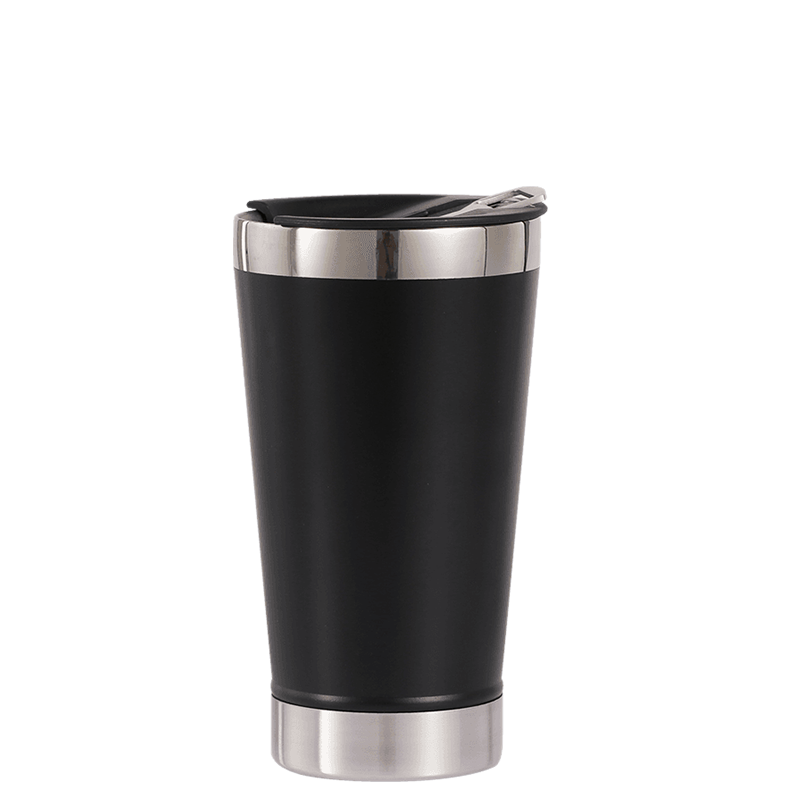
At its core, a Car Tumbler is shaped to work with vehicle cup holders. The base is usually narrower or gently tapered so it sits securely without wobbling. This shape helps prevent tipping when the car accelerates, brakes, or turns. Many designs also include a non-slip base material to reduce movement caused by vibration.
Another defining trait of a Car Tumbler is its lid. The lid is built for controlled, one-handed use, allowing the driver to open, sip, and close it with minimal effort. This often means a flip-top, push-button, or sliding mechanism that can be operated without twisting the wrist or using both hands. The goal is not only convenience, but also reducing distraction while driving.
Temperature control is also part of what makes a Car Tumbler distinct. Insulated walls help keep hot drinks warm and cold drinks cool, while also limiting condensation on the outside. This matters in a car because moisture and heat can damage interior surfaces over time. A dry exterior helps protect cup holders, consoles, and upholstery.
Durability is another important aspect. A Car Tumbler is expected to handle frequent movement, occasional drops, and repeated opening and closing. Materials are typically chosen to balance weight, strength, and comfort in the hand, making the tumbler suitable for daily commutes as well as longer drives.
In simple terms, a Car Tumbler is not just a cup that happens to be used in a car. It is a piece of everyday driving gear, shaped and built around the realities of being behind the wheel, where stability, ease of use, and interior-friendly design matter just as much as holding a drink.
Every Car Tumbler has parts that talk to each other: a shell that takes bumps, a base that anchors, insulation that holds heat and prevents sweat, and a lid that needs to open and close reliably with one hand. Look at each piece not as an isolated feature but as part of a system that must perform while the vehicle is moving, turning, or stopping.
Sipping while steering demands attention and dexterity, and a sudden spill often triggers an instinctive reflex that can pull a hand or eyes away from the task of driving. Hot beverages are a particular hazard because they can cause an abrupt physical reaction when spilled. Avoiding spills reduces the chance of sudden maneuvers that place everyone on the road at risk.
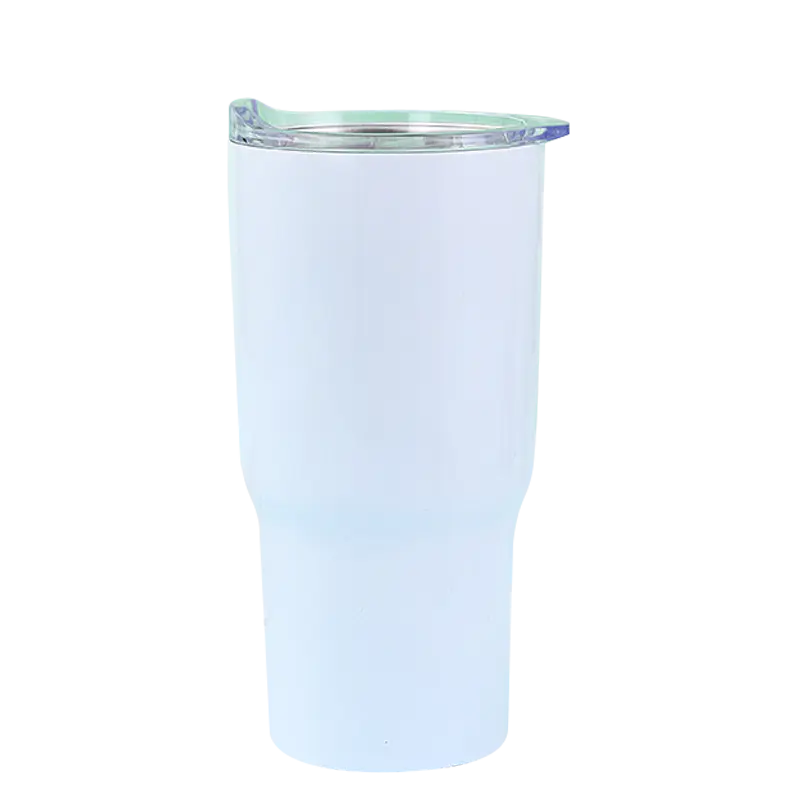
Vehicles vary wildly in the diameter and depth of cup holders, and a gap between tumbler and holder invites wobble. A tapered base that narrows toward the bottom often provides a firmer seat in holders designed around tapered shapes. Rubber or silicone rings at the base add grip and absorb vibration. Some designs include removable inserts to adapt the same tumbler to different vehicles. If a tumbler rotates or tips when you give it a firm twist while seated, that model is likely to do the same on a bumpy road. Recent discussions about cabin ergonomics show that cup-holder size has become a notable consumer concern, as many drivers swap in large reusable tumblers that were not considered when vehicle interiors were designed.
A driver needs a lid that provides tactile certainty: press, sip, and reseal without fumbling. Flip-top spouts with a positive latch are useful when one-handed operation is essential, but the latch must lock tightly to prevent accidental opening. Slider lids can be convenient but sometimes offer only partial sealing unless they have a soft gasket and a locking position. Push-button lids that pop open on command can be fast to use, but the mechanism must resist accidental activation during storage. Straws make sipping simple but may not seal against splashes or sudden turns. When choosing, prioritize lids that close with a clear click and that let you drink steadily without tilting excessively.
Thermal design matters for comfort and for protecting interiors. Vacuum pockets between walls slow heat transfer so beverages stay at drinking temperature for longer, and double-wall construction prevents external condensation that could leave moisture rings in cup holders. Stainless steel offers structural strength and resists flavor transfer, while exterior powder coatings or silicone sleeves add grip and protect interior surfaces from scratches. Condensation or a wet base can slide and mark leather or vinyl, so " no-sweat " outer walls are a meaningful car-friendly trait.
Road trips amplify small weaknesses. Repeated opening and closing can stretch or warp seals, threads can strip if cross-threaded during hurried use, and thin lids may crack when dropped. Paint and coating can chip after repeated impacts or contact with keys and loose objects. Look for replaceable gaskets and lids that can be removed and inspected; modularity extends useful life and avoids premature disposal.
| Problem observed | Likely cause | Quick home check |
|---|---|---|
| Drips after closing | Worn or misaligned gasket | Close lid, tip upside down for 10 seconds |
| Tumbler wobbles in holder | Too-wide base or flat bottom | Sit tumbler in holder and twist firmly |
| Exterior wet with condensation | Single-wall or poor insulation | Fill with cold water and test after 10 minutes |
| Latch feels loose | Plastic fatigue in mechanism | Open/close 20 times to feel resistance change |
Slim tumblers slide into narrow holders, offer lighter handling, and reduce collision with console knobs or armrests. If your car's holders are shallow or you share space with a passenger who uses the center console, the slim profile reduces interference. Choose slimmer vessels when you prioritize ease of handling over large volume, or when you frequently place the tumbler in cup holders that are closely spaced.
If you need longer between-fill intervals, a fuller-capacity insulated mug can deliver longer thermal retention and fewer interruptions. Heavier, wider models can also be more stable in certain holder shapes because of a lower center of gravity, provided their base matches the holder geometry. For drivers who prefer only occasional stops, capacity and insulation are trade-offs worth accepting.
Repeated friction from a textured metal shell can abrade delicate trim surfaces, especially when the tumbler is allowed to slide. Condensation and minor leaks accumulate into staining and odor problems. Harsh finishes and acidic beverages left in contact with soft plastics can dull surfaces. Even subtle heat transfer from an uninsulated base can warp thin plastic holders or soften adhesives used in trim assembly.
Look beyond the headline features to find the details that matter in daily use. Thread rims reinforced with metal reduce cross-threading. Internal anti-slosh baffles dampen liquid motion during turns. Low-profile lid profiles avoid contact with dash-mounted items or infotainment panels. Some bases include keyed pads that prevent rotation and keep the handle facing one direction. Replaceable parts—seals, mouthpieces, and lids—mean a longer service life and lower waste.
| Feature | Why it matters in the car |
|---|---|
| Anti-slosh baffle | Reduces liquid momentum on corners |
| Low-profile lid | Clears vents and dash surfaces |
| Replaceable gasket | Extends usable life and hygiene |
| Non-rotating keyed base | Keeps orientation consistent during drive |
| Thread reinforcement | Prevents strip and noisy rattling |
While shopping, simulate typical driving conditions. With the tumbler in the car holder, perform these quick checks: rotate the cup firmly, tap the brake pedal while watching for movement, close the lid and shake with moderate force, and try opening with one hand. A tumbler that passes these quick trials will likely behave during daily driving.
Daily rinse after use prevents staining and flavor buildup. Periodically remove and inspect gaskets; brittle or compressed seals should be replaced. For odor or residue, use a gentle soak and a soft brush to reach mouthpieces and lid channels. Avoid abrasive cleaners that strip protective coatings; gentle, food-safe cleaners prevent premature wear.
Adapters that reduce gap in mismatched cup holders, silicone liners that prevent sliding, and simple coaster pads can transform a tolerable fit into a secure one. A small, thin coaster placed under a tumbler absorbs minor leaks and shields upholstery from heat or moisture.
| Driver profile | Priority while driving | Recommended focus |
|---|---|---|
| Short commuter | Ease of one-handed use | Lightweight, low-profile lid |
| Long-distance traveler | Thermal retention and durability | Double-wall vacuum, replaceable seals |
| Shared vehicle user | Versatility | Modular base, adaptable inserts |
| Rideshare driver | Hygiene and robustness | Easily cleanable lid, durable exterior |
Fill the tumbler and secure it in place. Conduct a series of controlled adjustments: fast acceleration from standstill, a few sharper turns at low speed in a safe area, and a single hard deceleration simulation. Check for loosened components, changes in lid function, or pooled liquid. These trials reveal wear points that may not appear in store handling.
Non-abrasive coatings on exterior shells protect trim surfaces; rounded edges avoid scratching; and low-friction silicone bases prevent micro-abrasion in cup-holder wells. Choosing materials that do not chemically interact with upholstery cleaners or scented candies keeps the cabin looking and smelling better over time.
A tumbler that requires constant readjustment steals attention. A comfortable mouthpiece, a reliable opening mechanism, and a stable seating solution let a driver sip with minimal cognitive load. Ergonomic design also reduces the chance that a driver will attempt risky maneuvers to secure or retrieve a misbehaving tumbler.
| Lid type | One-handed operation | Seal reliability | Cleaning ease |
|---|---|---|---|
| Flip-top with latch | High | Medium–High | Medium |
| Slider with gasket | Medium | Medium | High |
| Push-button auto-open | High | High if lock present | Medium |
| Straw lid | High | Low–Medium | High |
Fill levels matter: leaving headspace reduces sloshing. Securely fasten the lid; a partly seated lid will leak despite a sturdy shell. Use a coaster or liner if your holder is a poor match, and avoid placing the tumbler near controls or pocketed doors where an accidental bump can send it airborne.
When possible, stow a hot tumbler in a deeper holder or use a seat-mounted accessory that captures lateral forces. If leather or vinyl is present, consider a thin barrier to prevent staining from minor leaks. Periodically clean the holder area; trapped crumbs and moisture can accelerate wear on both the tumbler and the cabin surface.
| Task | Frequency | Why it helps |
|---|---|---|
| Rinse lid and mouthpiece | After each use | Removes residue and reduces odors |
| Inspect gasket | Monthly | Prevents unexpected leaks |
| Deep clean with mild soak | Biweekly | Eliminates buildup and microbial growth |
| Check base fit in car | Quarterly | Ensures continued stability |
A heavier, large-volume tumbler may retain heat longer but can be harder to handle and may exert more force on a holder during sudden stops. A slim, lightweight cup may be easy to tuck into tight spaces but could be prone to tipping if the holder is shallow. Think through how you drive, how often you stop, and how you carry other items; the right compromise depends on habits more than on marketing claims.
Little engineering choices—such as whether a lid's hinge is metal or plastic, how the thread is chamfered to reduce cross-threading, or whether a mouthpiece is recessed to reduce drooling—accumulate into a user experience that feels solid or fragile. Choose models where the small details reflect intentionality.
Run a quick "shake-and-inspect" routine: fill the tumbler, seal it, and shake vigorously. Check for leaks at the seams, listen for rattles that indicate loose inserts, and feel for changes in lid tension. The types of failures that emerge from this test often match what long drives expose.
Prioritize products with user-replaceable gaskets and lids. Even if a brand is not well known, a tumbler that opens into modular parts is easier to maintain and keeps performance steady without a full replacement.
Keep a small microfiber cloth and a narrow brush in the center console. Wipe spills immediately and air out the vehicle regularly to prevent lingering odors. When a stain sets, a targeted gentle cleaner and light agitation are preferable to aggressive scrubbing that damages finishes.
A well-designed tumbler removes small frictions: it fits without wobble, opens with one hand, seals against sudden maneuvers, and cleans without drama. That removal of micro-stressors translates into calmer starts, fewer stops for cleanup, and a small but steady boost in daily comfort.
When a cup stays secure in its holder, the drive feels less interrupted and attention stays where it belongs. Treat the tumbler as a tool: test how it sits, check that the lid seals with a confident click, and keep gaskets and mouthpieces clean so performance holds up. Those small rituals reduce spills, protect upholstery, and make the routine of commuting or running errands noticeably easier on a practical level.
Your email address will not be published. Required fields are marked *
* Your email is safe with us, we don't spam.

Our company's products include vacuum flasks, beer mugs, coffee mugs, car tumbler, fire stove and tensile parts, etc.
Phone: +86-13566758039
Tel: +86-0579-87171178
Fax: +86-0579-87171178
E-mail: [email protected]
Add: No.29, Qiaodong Road, Qiaotouzhou Village, Longshan Town, Yongkang, Jinhua, Zhejiang, China.
Copyright © 2026 Yongkang Aijun Industry & Trade Co., Ltd.



 English
 中文简体
中文简体 日本語
日本語 Français
 Español